- Product Information
- Product Resources
- Enquire
- Related Products
OE design
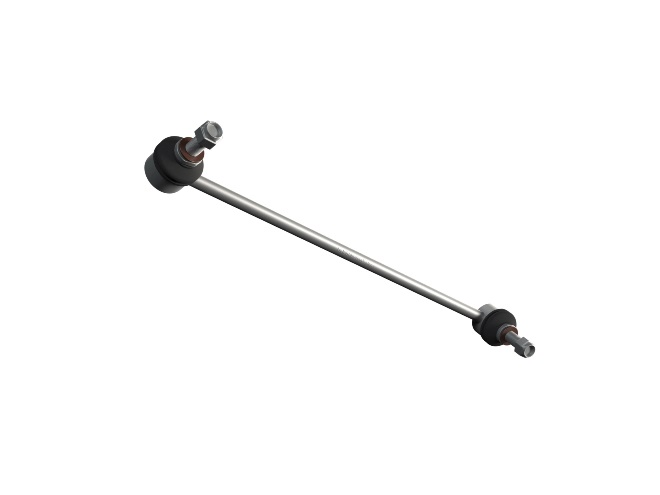
Delphi link stabilizers come in either steel, aluminium or reinforced plastic as per the OE. The lightweight property of our plastic link stabilizers , helps to reduce weight and dampen vibrations, whereas the corrosion-resistant steel makes for a stronger, longer-lasting part. Whichever material you fit, you can be assured it’s been manufactured to the very latest OE specifications.
Engineered for a stronger, durable part
.jpg?sfvrsn=e723e13c_7)
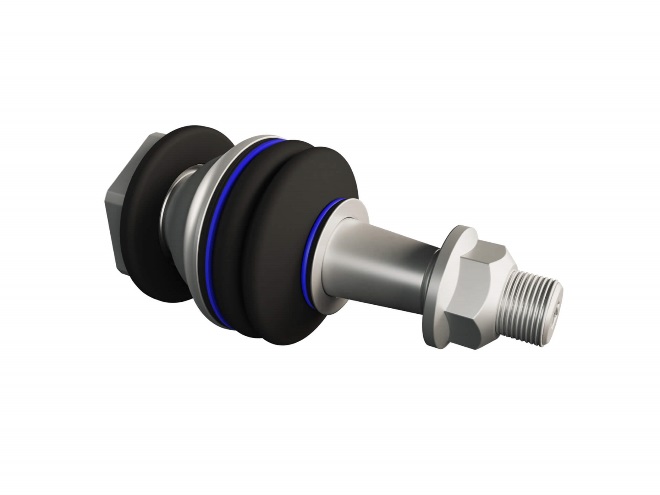
Because they’re subject to extremely high stresses, Delphi link stabilizers feature a larger, surface-hardened steel ball pin, wear-resistant plastic clip-on socket, reinforced link rod and a temperature-resistant, high-performance grease. Together they offer improve load carrying capacity and service life.
Added protection

Given their position, link stabilizers are particularly vulnerable to contamination from dirt and moisture. For reliable protection from this and more, we use sealed, high-grade rubber boots on all our link stabilizers. We also apply an environmentally friendly, water-based cataphoretic coating providing up to 10 years’ corrosion protection.
Rigorous testing
Link stabilizers are subject to massive shock loading, so we conduct tensile strength testing to validate both the product housing and welding strength - applying force through the centre of the housing until breakage occurs. Importantly this is never sooner than the OE.
Our meticulous approach to product development and testing means you can fit Delphi link stabilizers with confidence. But for added peace of mind, they also come with an extended three-year or 36,000-mile warranty.
The Delphi Difference
-
100 years of OE experience, supplier to the world’s top automakers
-
OE heritage and knowledge built into every aftermarket part
-
Comprehensive portfolio for a wide range of vehicles and model years
-
Streamlined SKUs for easy inventory management
-
Support through tools, tips and training

Related product resources and downloads
Resource Highlights
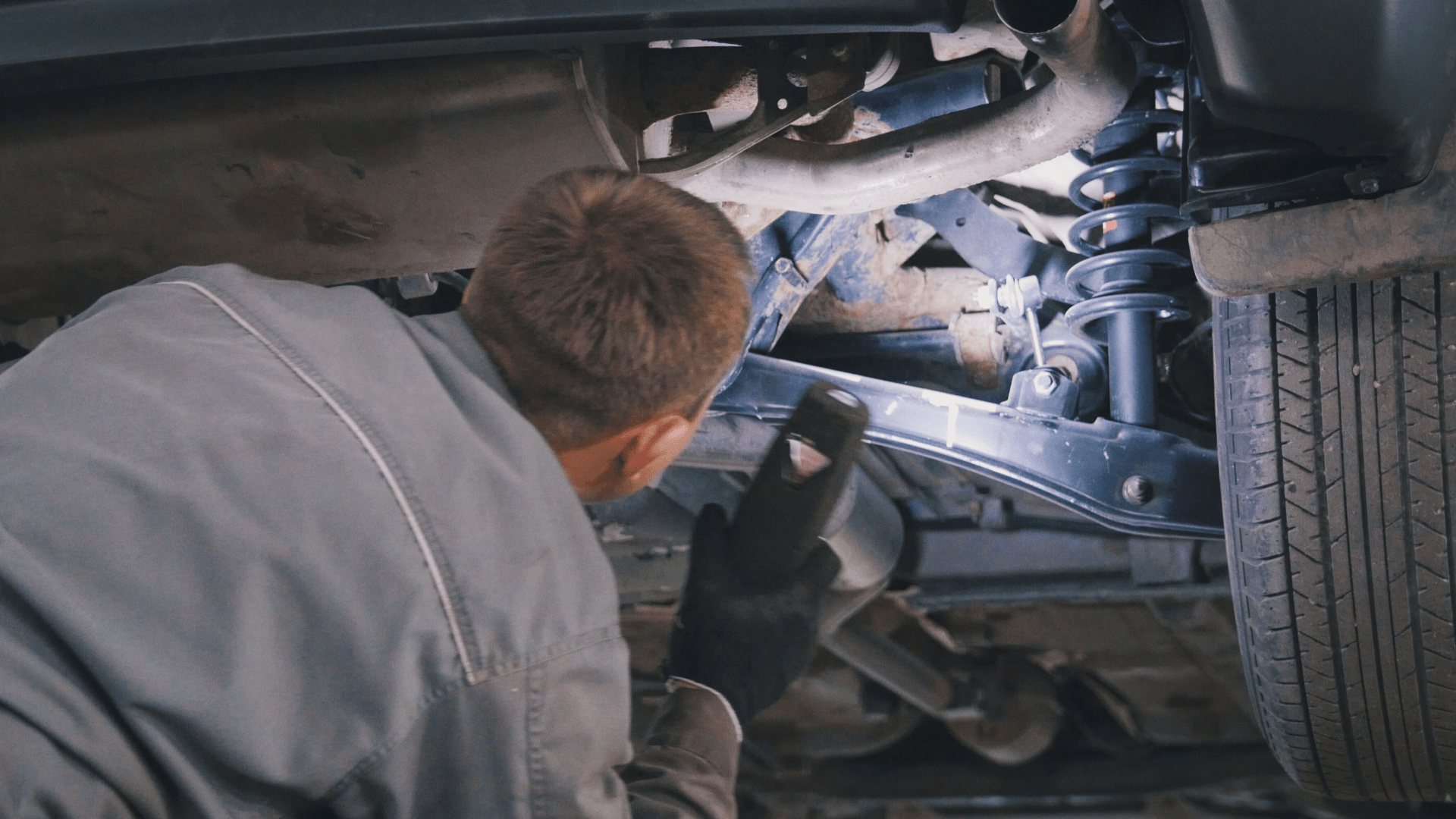
In this article you will find out about the best practice advice on strut mount replacement
You know that wishbones, ball joints and link stabilizers are all key when it comes to servicing steering and suspension, but what about the top strut mount? Perhaps the unsung hero of any system, it helps to cushion noise and vibration, while also acting as a steering pivot for a smooth and responsive ride.
Since any wear or tear to this part can negatively affect vehicle handling and, in turn, safety, it’s important to know how it should be serviced.
What is a strut mount?
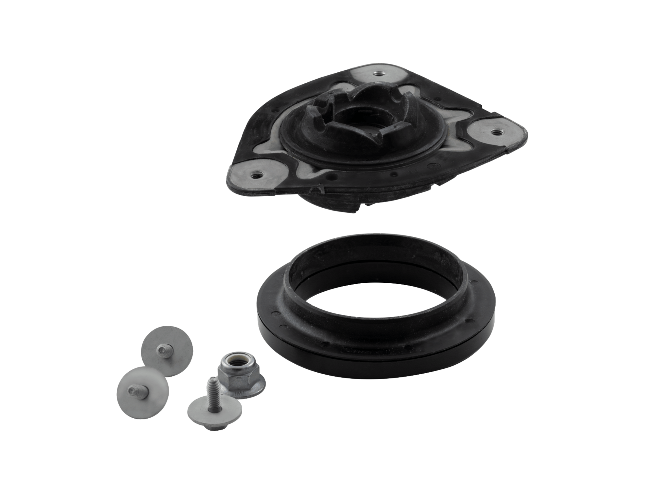
Fitted on cars equipped with Macpherson type struts, the top strut mount attaches the top of the strut to the vehicle’s chassis. Its purpose, however, extends far beyond a simple mount. Indeed the top strut mount has two main roles; it insulates the strut from the vehicle, reducing both noise and vibration. Many front strut mounts also contain a bearing which acts as a steering pivot – so as you turn the steering wheel from left to right and vice versa, the strut pivots on the strut mount, controlling the angle and alignment of the wheels.
Why it fails?
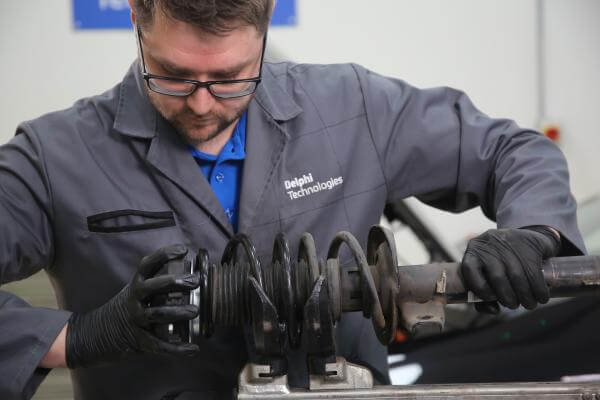
Although top strut mounts are designed to last, they are subject to significant stress day in, day out. Together with the bearing and coil spring they hold the full weight of the vehicle. They are also constantly moving – a typical strut will endure millions of cycles during its lifetime – up to 1750 times for every mile driven on a normal road surface. This constant up and down movement, which is exacerbated by potholes, bumps and curb strikes, pushes and pulls at the mount causing wear overtime. In addition, environmental factors such as ice, water, salt spray, humidity and temperature changes can all cause damage.
Symptoms of a faulty strut mount
Like most other parts, there are a few tell-tale signs of a faulty strut mount. If your customer complains of any of the following, the top strut mount could be at fault:
Abnormal noises coming from the steering and suspension system. For example, clunking when driving over bumps or squeaking when maneuvering at low speed
- Premature and/or uneven tire wear
- Accelerated wear of shock absorbers
- Excessive vibration
- Poor wheel/tire alignment
- Poor steering return
As well as these common symptoms, a good visual inspection will help to identify possible wear or damage. Look for any signs of corrosion, cracks or tears in the rubber, separation from the metal and excessive movement in the strut assembly. Also check the steering pivot to ensure smooth and free rotation.
When to replace?
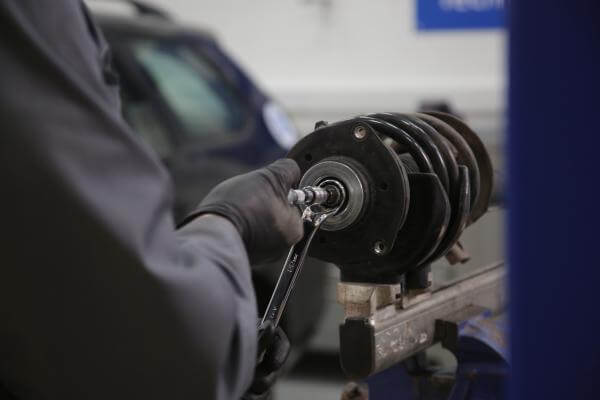
Although not part of the routine service schedule, you should regularly check the top strut mounts and, where necessary, replace in pairs – left and right sides – as soon as possible. As well as affecting steering response and driver comfort, worn or damaged top strut mounts can have a knock-on effect on other parts of the steering and suspension system such as shock absorbers and tires, accelerating wear and causing unnecessary expense for the vehicle owner.
Also, because the top strut mount is essentially a low-cost part, in what is often a very labor intensive process, it makes sense to fit new ones whenever you’re replacing the struts. Either way, in most cases, you’ll have to remove the strut and decompress the coil spring, so it could save you from having to do the same job twice.
Why replace in pairs?
Because top strut mounts will typically endure the same number of miles and road conditions, chances are if one side is worn, the other will be too. It's therefore advisable to replace in pairs – left and right side. Doing this will ensure their performance is evenly matched across the axle for a balanced ride height and equally responsive steering and handling. An imbalance on either side could impact both chassis and wheel movement, ultimately compromising the vehicle’s handling.
Top strut mount replacement can be a lengthy process, but by following the best practice advice shown in the video below Delphi can help to make it as seamless and ‘pain-free’ as possible:
Read more about our top strut mount programme.

Visit our Technician Library for access to Documents and Downloads
Get in touch

Find out where to buy Delphi parts