- Product Information
- Product Resources
- Enquire
- Related Products
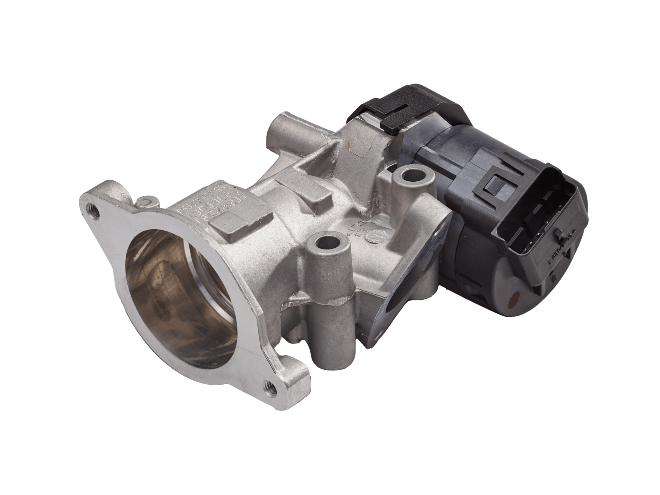
Exhaust Gas Recirculation Valve OE technology
With over 20 years OE EGR system expertise, our valves are fitted as OE to millions of vehicles worldwide. We bring this same expertise to the aftermarket, with a comprehensive range including rotary and linear configurations, all based on our proven electronically actuated EGR valve technology.

Built for tough conditions
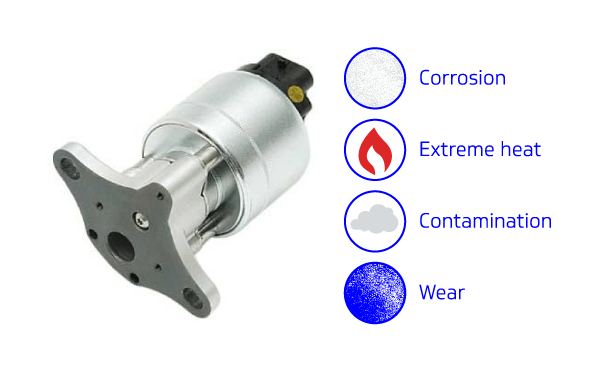
Because of the harsh environment of its location on the intake manifold, we only use the highest quality materials such as robust stainless steel valves, high temperature internal components and RTV silicon seals. The result – a quality EGR valve, highly resistant to extreme heat, contamination, corrosion and wear.
Precision engineered
Even the smallest of differences in the shape of the valve head can affect both valve leakage and flow metering, leading to increased fuel consumption, carbon build-up and decreased vehicle performance. That’s why every Delphi EGR valve is precision engineered to match the OE design.
Super quick response time
All our valves feature fast opening and closing response times for enhanced engine control and lower emissions from reduced exhaust gas lag. The high opening and closing force also helps to minimize the impact of corrosion, ensuring a longer lasting part.
The Delphi Difference
-
100 years of OE experience, supplier to the world’s top automakers
-
OE heritage and knowledge built into every aftermarket part
-
Comprehensive portfolio for a wide range of vehicles and model years
-
Streamlined SKUs for easy inventory management
-
Support through tools, tips and training

Related product resources and downloads

Resource Highlights
In this article you will find out more about the growing market for the exhaust gas temperature sensor. Capitalise on this fast-growing market, by choosing a quality exhaust gas temperature sensor from an OE engine management provider like Delphi.
As engine temperatures rise, so too has the market for exhaust gas temperature (EGT) sensors. Here, we take a look at how these heat protecting sensors have become an increasingly important part of today’s modern vehicle. And how by partnering with an OE engine management provider, such as Delphi, they can become an equally important part of your business too.
A few years ago, you would have been able to tell how powerful and fast a car was, just by the size of its engine. Not today! In a bid to meet increasingly stringent emission legislation, vehicle manufacturers are finding more meaningful ways to squeeze more power from smaller amounts of fuel – a trend known as downsizing. The result? Smaller, more fuel-efficient engines, which thanks to the use of turbochargers and superchargers, offer the same, if not more power than their predecessors.
This all sounds hugely positive, right? However, there’s a downside. As with all forced induction systems, the engine and its internal components will be exposed to higher pressures and higher temperatures. This makes them more vulnerable to damage. That was until the exhaust gas temperature sensor came into its own.
Originally designed to monitor the catalytic converter, exhaust gas temperature sensor technology has become more and more complex in recent years. Now, its main job is to protect key components from high temperatures in both diesel and petrol engines. So, if the sensor detects too much heat, the ECU will step in and take appropriate action to reduce it. For example, by lowering boost pressure in the case of the turbocharger. Or increasing the quantity of fuel injected for the catalytic converter. In diesel engines, they are also used to monitor the temperature of the diesel particulate filter (DPF) to establish the correct temperature for DPF regeneration. Making them a crucial part of any modern vehicle…
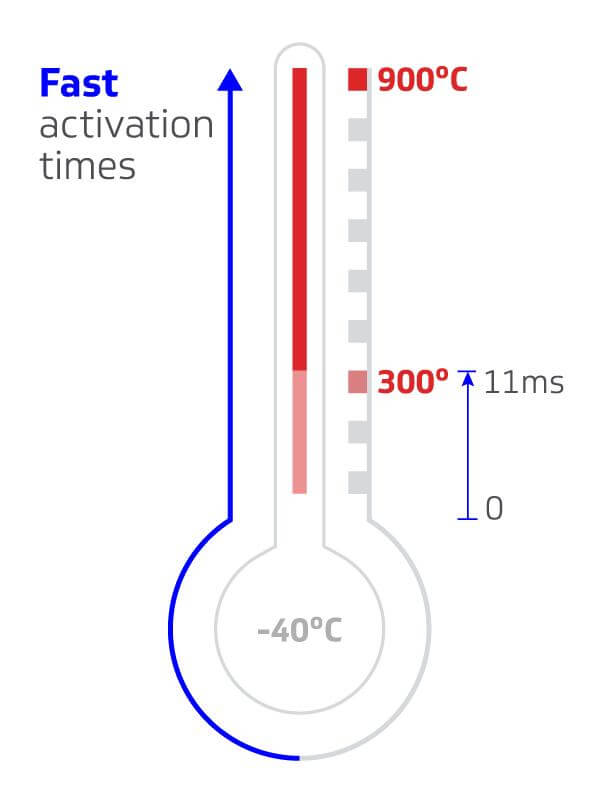
…and your business too! With 3 or more of these high failure parts fitted to many of today’s vehicles, you are sure to be seeing plenty of these in your garage needing a high-quality replacement. To help you take advantage of this fast-growing opportunity, we’ve recently added exhaust gas temperature sensors to our extensive vehicle electronics line up. Featuring the latest generation thin film RTDs, they provide greater protection from environmental and mechanical stresses, whilst offering improved response times - taking less than 11 milliseconds to jump 300°C – and a wide temperature range - from as low as -40°C, all the way up to 900°C. The new range includes more than 55 parts, covering over 480 applications (make/model/engine size) including Audi A3, Volkswagen Golf and Vauxhall/Opel Astra.
As the trend for downsizing continues, engine temperatures will get even hotter. And so will the aftermarket opportunity. So make sure you’re ready to capitalise on this fast-growing market, by choosing a quality exhaust gas temperature sensor from an OE engine management provider like Delphi.

Visit our Technician Library for access to Documents and Downloads
Get in touch

Contact Us
Visit our Contact hub to find a range of enquiry types suited to help you find the exact support you are looking for.