- Product Information
- Product Resources
- Enquire
- Related Products

SHIMS
The finely tuned layers of OE dampening material help to reduce the transmission and amplitude of vibration and provide a thermal barrier for more consistent braking.SHIMS
The finely tuned layers of OE dampening material help to reduce the transmission and amplitude of vibration and provide a thermal barrier for more consistent braking.BACK PLATES
The backbone of every pad, our backing plates are manufactured from a high-strengthpressed steel and coated in a special powder for improved protection, installation and pressure transmission.
BACK PLATES
The backbone of every pad, our backing plates are manufactured from a high-strengthpressed steel and coated in a special powder for improved protection, installation and pressure transmission.
UNDER LAYER
The 3mm layer of OE under layer technology in all our pads absorbs noise and acts as a thermal insulator, reducing heat transfer to the brake fluid.UNDER LAYER
The 3mm layer of OE under layer technology in all our pads absorbs noise and acts as a thermal insulator, reducing heat transfer to the brake fluid.FRICTION MATERIAL
We use over 130 different friction ingredients to create unique formulations, each designed to ensure the best match of pad to vehicle application.FRICTION MATERIAL
We use over 130 different friction ingredients to create unique formulations, each designed to ensure the best match of pad to vehicle application.FRICTION SURFACE
Our OE configured chamfers, help shorten bedding in, and reduce initial squeal, for OE performance from day one. Additional slots allow the pad to flex, preventing stress cracks.FRICTION SURFACE
Our OE configured chamfers, help shorten bedding in, and reduce initial squeal, for OE performance from day one. Additional slots allow the pad to flex, preventing stress cracks.We Call it Delphi's 5 Layers of Quality
Contributing to a large part of the vehicle’s stopping power, brake pads are one of the most important components in the braking system - so when it comes to quality, there can be no compromise.
As a leading braking manufacturer, our pads are designed, manufactured and tested for outstanding performance.
First-to-market
Delphi first-to-market brake parts provide a huge advantage to our aftermarket customers, allowing workshops to generate additional revenue by accessing the repair business on these newer vehicles sooner, increasing both profitability and
customer retention.

Balancing Precision and Environmental Impact
Independent testing is vital in the automotive industry, ensuring unbiased results that prioritise consumer safety and environmental responsibility.
Delphi subjected its latest brake pads to rigorous independent testing in Mojacar, Spain, where ideal conditions - over 3,180 hours of sunshine annually and minimal rainfall - ensured accurate assessments. Here, Delphi’s brake pads were put to the test against other premium brands. The goal was clear: to see which pads could deliver not just in performance but also in environmental responsibility...
...and the results are in!
See how Delphi performed - check the results now!
Breaking New Ground With Delphi EV Pads

Professional+ Brake Pads. Powering the LCV Market.
Unlike passenger cars or full-size trucks, LCVs operate in a demanding middle ground. They may not boast high horsepower, but they shoulder heavy loads and face relentless stop-start city driving. Professional+ is specifically engineered to handle this.The Delphi Difference
-
100 years of OE experience, supplier to the world’s top automakers
-
OE heritage and knowledge built into every aftermarket part
-
Comprehensive portfolio for a wide range of vehicles and model years
-
Streamlined SKUs for easy inventory management
-
Support through tools, tips and training

Related product resources and downloads

Resource Highlights
As the world’s leading automotive companies continue to develop safer, future-ready vehicles, Advanced Driver Assistance Systems (ADAS for short) will become increasingly commonplace. Here we talk you through the main systems available on the market today. And just how these smart, connected technologies are helping to both assist drivers, and improve traffic safety.
Anti-Lock Brake Systems (ABS)
Standard on many vehicles today, ABS prevents the wheels from locking up during emergency stops, by detecting differences in wheel speeds, and then rapidly pulsing the brakes until the wheel is turning at the same speed as the others.
Brake Assist (BA)
BA or Emergency Brake Assist (EBA), is designed to recognize an emergency brake, by using data from the accelerometer and front radar or ultrasonic sensors. If the driver has not applied sufficient force, the emergency braking system kicks in, working in conjunction with the ABS, to provide extra braking power.
Electronic Stability Program (ESP)
Also known as Electronic Stability Control (ESC), ESP is designed to reduce the risk of skidding by applying the brakes to the relevant wheel(s), and decreasing engine power, if it detects an over or understeer when cornering, an evasive maneuver or a sudden change in road conditions or traction. Note, it’s important to have any accessories i.e. a tow bar, fitted and programmed correctly. When a trailer or caravan is connected, the ESP is automatically configured to consider the additional weight load and distribution.
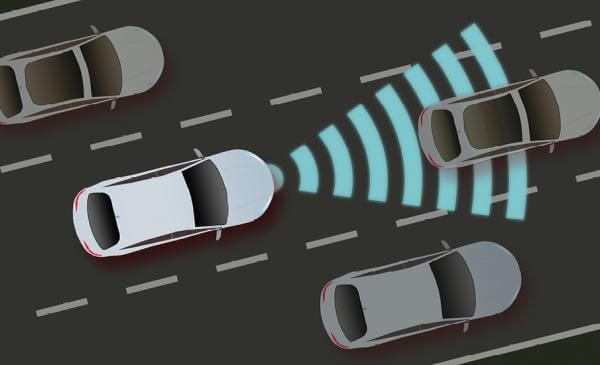
Adaptive Cruise Control (ACC)
Otherwise known as autonomous cruise control, active cruise control, intelligent cruise control or radar cruise control, ACC automatically adjusts the vehicle’s speed to maintain a safe distance from traffic ahead. Most systems automatically turn off below a certain speed, however, some offer a ‘Stop & Go’ or ‘Queue Assist’ function for use in slow-moving traffic to help the driver slow or stop the vehicle.
Forward Collision Warning (FCW)
Also referred to as collision avoidance or collision mitigation system, FCW continually monitors the road ahead to detect objects in the vehicle’s path, such as pedestrians, animals or other vehicles. In the event of an imminent collision, the system warns the driver through audio or visual signals, so that they can take evasive action i.e. by applying the brakes or steering.
Autonomous Emergency Braking (AEB)
Also referred to as automatic emergency braking, AEB is an evolution of the collision warning system. Instead of providing just a warning to the driver, it engages the braking and/or steering, without driver input, to help lessen the impact of a crash, or even prevent it from happening in the first place.
Lane Departure Warning (LDW)
LDW systems are designed to prevent drivers from unintentionally straying out of their lane. If the system detects that the vehicle is drifting, without any appropriate signals, it generates an audio-visual alarm so that the driver can take corrective action.
Lane Keep Assist (LKA)
LKA or Lane Keeping Systems are a step on from Lane Departure Warning systems. Rather than simply warning a driver of a lane departure, LKA corrects the line of travel automatically, steering it back into position without any driver input. Some vehicles also have an advanced version of this called Adaptive Lane Guidance. This constantly makes adjustments to keep the driver in the center of their lane at all times.
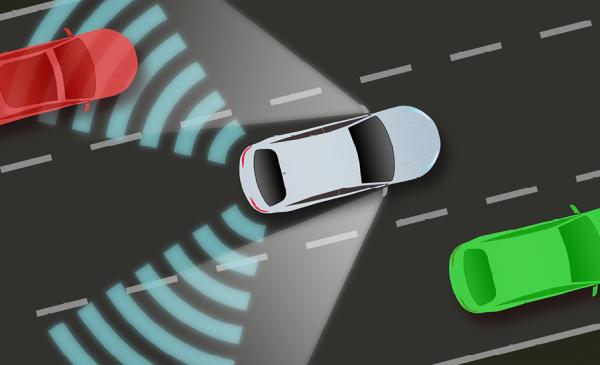
Lane Change Assistance
Commonly known as a Blind Spot Detection or Blind Spot Monitoring, lane change assistance uses sensors to monitor the surrounding view of the vehicle for any lane movement. If the system determines that it’s unsafe to change lanes, because of another vehicle in the intended lane, especially in the driver’s blind spot, it signals an alarm.
Intelligent Speed Assistance/Adaptation (ISA)
ISA helps the driver to maintain a safe and/or legal speed. If the vehicle exceeds this limit, the system will either alert the driver or take action to reduce the speed by limiting engine power.
Traffic Sign Recognition (TSR)
By scanning the road ahead, TSR helps drivers identify upcoming road signs such as changes in speed limits or potential hazards. The system interprets the sign and relays it onto the dashboard and/or infotainment display, to alert the driver.
Adaptive Headlights
Using input on the vehicle’s steering, speed, and elevation, adaptive headlight technology keeps the vehicle’s headlights on the road at all times. As well as improving visibility in low-light conditions, it also reduces glare for oncoming drivers.
Tire Pressure Monitoring Systems (TMPS)
TMPS warns the driver if one or more tires are underinflated by measuring either the rate of revolution or pressure within, each tire. As well as improving safety, the system helps to reduce emissions and fuel usage.
Night Vision
Featuring thermographic cameras, night vision systems can detect objects beyond the reach of the vehicle’s headlights, alerting the driver to potential collisions in low-light or poor weather conditions.
Parking Assistance
One of the more common ADAS technologies, parking assistance ranges from rearview cameras that simply provide audio or visual signals to the driver on the proximity of any obstacles, to fully autonomous vehicle systems that physically steer the vehicle into and out of the space.
Driver drowsiness
Also called driver awareness detection, these systems can detect the onset of fatigue by observing the driver's behavior at the start of and during every trip. If any signs are spotted the system sends a warning signal to the driver.
ADAS systems are classified as levels 1 – 5 by the Society of Automotive Engineers, the following is a guide to those levels.
Level | Definition | Guidelines |
| 0 | No automation | Driver warning or minor intervening |
| 1 | Hands on | The driver and vehicle share control, example Adaptive cruise (ACC, TACC) |
| 2 | Hands off | The automated system may take full control, the driver must be ready to intervene immediately |
| 3 | Eyes off | The driver can turn their attention away from driving, the driver must be able to take over given reasonable notice |
| 4 | Mind off | The driver may do other tasks ie. go to sleep, this maybe in pre-determined geofenced areas |
| 5 | No steering wheel required | No driver is required |


Visit our Technician Library for access to Documents and Downloads
Get in touch



Find out where to buy Delphi parts