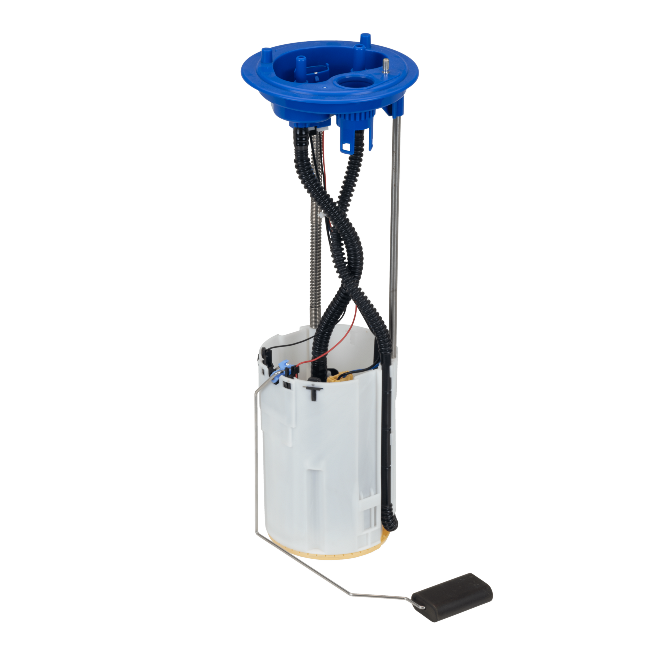
- Product Information
- Product Resources
- Enquire
- Related Products
Distinctly Delphi Fuel Pumps
- Anodized aluminum can reduce flow loss by up to 100% in severe contamination
- New carbon commutator extends fuel pump life by up to 300% over commonly used copper commutators by reducing oxidation and premature wear*
- Over-molded armature protects pump windings in corrosive environments
- Button style contacts feature additional wear material that can last for over 1 million cycles
- High capacity synthetic mesh inlet filter is able to filter out all items larger than 30 microns
- Distinctly Delphi with an electric blue fuel pump top, module top cover and strainer material
*In contaminated fuel or fuel with alcohol blends
| Delphi part number | Popular Applications | EMEA car parc |
| FG1455-12B1 | AUDI A1/A1 Sportback/S1 Quattro/S1 Sportback Quattro, SEAT Ibiza/Ibiza SC/Ibiza ST/Toledo, SKODA Fabia/Fabia Scout/Rapid/Rapid Spaceback/Roomster/Roomster Praktik/Roomster Scout, VW Polo | 12.4M |
| FG0989-12B1 | AUDI A3/A3 Cabrio/A3 Quattro/A3 Sportback/A3 Sportback Quattro, SEAT Altea/Altea Freetrack/Altea XL/Leon/Toledo, SKODA Laura/Octavia/Octavia Scout/Yeti, VW Beetle/Bora (Jetta)/Eos/Golf/Golf Cabrio/Golf Estate/Variant/Golf Plus/Golf Van (Variant)/Jetta/Jetta Wagon/Scirocco | 9.2M |
| FG1061-12B1 | ABARTH 500/500C/595/595C/695, FIAT 500/500C/500S/Panda/Panda Classic/Panda Van | 8.9M |
| FG1070-12B1 | AUDI A3/A3 Quattro, SEAT Leon/Toledo, SKODA Octavia/Roomster/Roomster Praktik/Roomster Scout, VW Bora/Bora Estate/Variant/Cabrio/Golf/Golf Cabrio/Golf Estate/Variant/Golf Van (Variant)/Jetta/Jetta Wagon/New Beetle | 5.6M |
| FG1498-12B1 | CITROËN C1, PEUGEOT 107/108, TOYOTA Aygo | 5.3M |
.tmb-1280w.jpg?Culture=en-GB&sfvrsn=a9375dbb_7)


The Delphi Difference
-
100 years of OE experience, supplier to the world’s top automakers
-
OE heritage and knowledge built into every aftermarket part
-
Comprehensive portfolio for a wide range of vehicles and model years
-
Streamlined SKUs for easy inventory management
-
Support through tools, tips and training

Related product resources and downloads
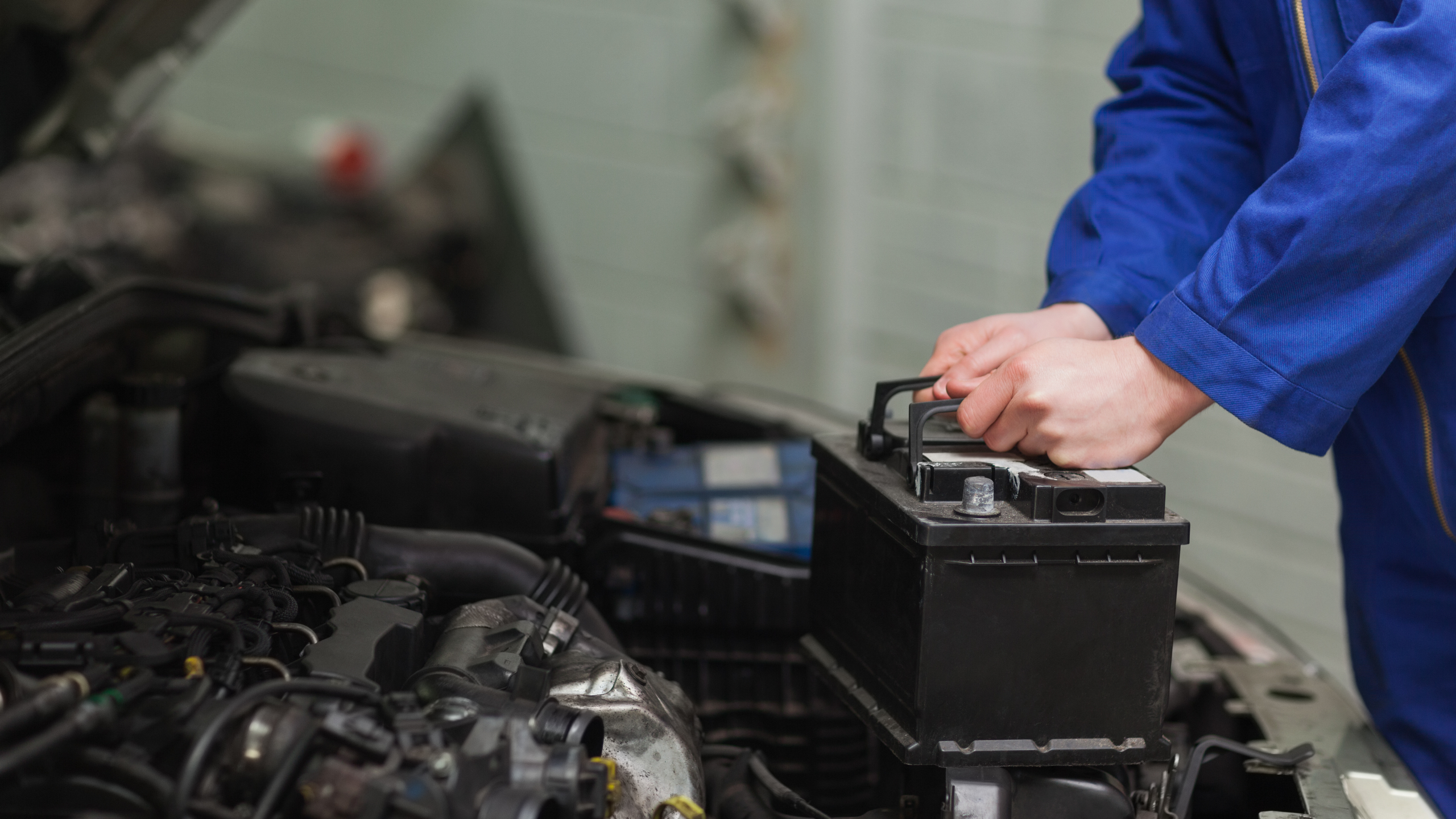
Resource Highlights
In this article you will find out about identifying the turbocharger failure modes: Oil starvation.
Engine oil is the lifeblood of a vehicle, and without it the modern turbo simply could not function.
How does a turbocharger work
The oil performs two key functions within the engine – firstly, it lubricates the various components which are required to move. With respect to a turbocharger, this means the main shaft assembly, onto which the compressor and turbine wheels are mounted.
Most modern turbochargers utilize a “plain” bearing system to control the movement of the main shaft. This means that they rely on a film of high-pressure oil to support the shaft, and consequently there is zero contact between the shaft and the housing. The shaft effectively ‘floats’ while it rotates at very high speed. Despite the film of high-pressure oil, the velocity with which the shaft must rotate in a modern turbo to generate the required flow of air (over 240,000rpm – that’s 4,000 rotations per second!) results in a very rapid build-up of heat.
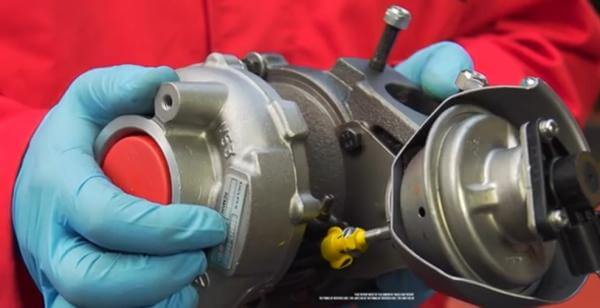
The second function of the engine oil is to transfer that build-up away from the highly stressed components, and thus prevent temperatures from rising to the level that would soften the construction materials, or cause total mechanical failure of the turbo. If the supply of engine oil is restricted, even momentarily, during high speed operation the resulting build-up of heat caused by the contact between the shaft and its bearing surface can lead to micro welding or shaft seizure, which can destroy the turbocharger within a matter of seconds.
Did you know many high-performance vehicles adopt the use of an add-on aftermarket “turbo timer?” This automatically allows the engine to idle for a predefined period after the key has been removed. The engine idling ensures a sustained supply of oil to the turbocharger to prevent oil starvation and carbon build up.
Determining Oil Starvation
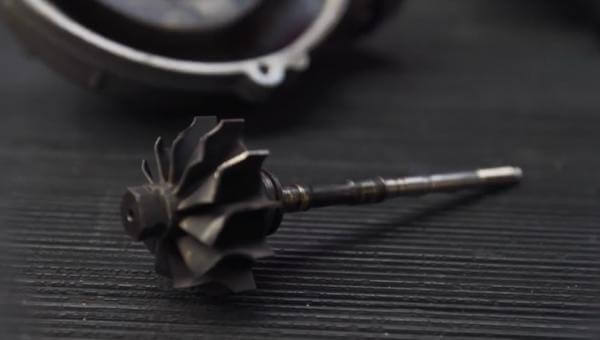
A common cause of turbocharger failure insufficient quality or supply of oil. If a turbocharger has failed due to oil starvation, there are several key indicators to investigate. Firstly, if the compressor wheel nut is missing, this is a clear indication of main shaft seizure. This may be categorized further by the micro-welding of the main shaft to its housing, locking it solid.
In severe cases, the main shaft can snap or separate, resulting in the uncontrolled explosion of compressor -- and turbine-wheels into their respective housings. For these reasons, it is absolutely essential that you ensure the supply of oil to the turbocharger is at its optimum from the very first moment that the key is turned, and following these guidelines can help eliminate the risk of oil starvation problems.
Good practice when starting a vehicle for the first time after fitting a turbocharger is to crank the vehicle for 5 seconds while preventing starting. This can be done by disconnecting the injectors (or equivalent) which allows oil to prime the turbo bearings without the turbo shaft rotating at high speed.
Consequences of Oil Starvation
In each case of turbocharger failure through oil starvation, the end result is much the same as that of Foreign Object Impact, and thus should be treated in the same way. The rapid propagation of hard metallic particles throughout the air and oil systems denotes the need for a comprehensive and methodical cleaning and inspection process, prior to replacing the turbocharger.
If You Discover Oil Starvation
- When fitting a replacement turbocharger, always ensure that the oil supply and return pipes, filters and fittings are in as-new condition. Any restriction in these components will cause oil supply problems, and ultimately the failure of the replacement turbo. If in doubt, replace the entire oil supply and return system, and explain to your customer why this is necessary. Ensuring right-first-time fitment and function by replacing such parts is far more cost- and time-efficient than having to replace a second turbocharger on the same vehicle.
- Always ensure that the engine oil and oil filter is replaced with brand-new OE quality parts when you fit a replacement turbocharger. Degraded, high-mileage engine oil cannot maintain its lubrication or viscosity properties, and a restricted oil filter can also directly contribute to oil starvation.
- In cases of high-mileage vehicles, the entire oil supply system should be thoroughly inspected and cleaned where necessary at every service. This may require the removal of the sump, oil pump and internal oil feed lines, along with the application of an engine oil flushing solution and subsequent oil changes as per the guidelines issued by your vehicle manufacturer.
- When replacing the turbocharger after an oil starvation-related failure, be sure to perform an oil pressure test wherever possible so as to identify any issues in the oil supply or return system. Identifying problems and taking preventative steps is always a better option than having to repair issues that could have been prevented. (Ensure the oil pressure test is carried out at two points, the oil pressure switch and the oil supply feed to the turbo).
- Always ensure that the oil level is as per the recommendation of the vehicle manufacturer. Low oil levels can directly contribute to oil starvation, but excessively high oil levels can also cause oil retention within the bearing cartridge, resulting in the build-up of heat, and ultimately failure.

Visit our Technician Library for access to Documents and Downloads
Get in touch

Find out where to buy Delphi parts