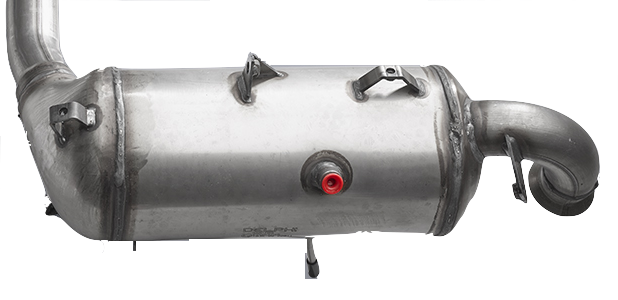
- Product Information
- Product Resources
- Enquire
- Related Products
- Critical to the longevity of green performing diesel engines
- Manufactured with silicon carbide
- Allows multiple regeneration cycles at temperatures over 600˚
- Wash coat of precious metals, enabling combustion at the best possible temperature
- Backed by Delphi OE expertise, training, technical support and diagnostics
The Delphi Difference
-
100 years of OE experience, supplier to the world’s top automakers
-
OE heritage and knowledge built into every aftermarket part
-
Comprehensive portfolio for a wide range of vehicles and model years
-
Streamlined SKUs for easy inventory management
-
Support through tools, tips and training

Related product resources and downloads

Resource Highlights
NOx Sensors: An introduction
The Oxides of Nitrogen sensor is also known as a NOx sensor. It’s installed within a vehicle’s engine to test for the amount of oxides of nitrogen being emitted. The sensor then sends this information into the SCR system, which reduces the amount of NOx emissions.
A NOx sensor that isn’t working properly can be the cause of many problems within a vehicle’s performance such as rough idling or jerky acceleration.
What causes a NOx sensor to fail?
There are a few common causes of NOx sensor failure, which occurs when the sensor is no longer performing its role accurately – or at all. The most common NOx sensor failure reasons are soot build-up and heat damage.
It helps to determine which component has failed; the probe which detects the chemical makeup of the exhaust, or the sensor module which relays that information to the SCR system.
How to test a NOx sensor
Testing the NOx sensor will allow you to identify the reason it has stopped functioning properly. You’ll also get a good idea through a NOx sensor test what the best course of action would be.
Use a scanning tool to diagnose faults
A diagnostic tool like Delphi's BlueTech VCI can help you find out what faults have been reported by the onboard computer, if any. Plug in the tool and select the relevant ECU to pull up a list of reported NOx sensor fault codes.
Examples of common NOx sensor fault codes
OBD error codes ranging from P2200 to P2225 are the codes commonly associated with a NOx sensor fault. A NOx sensor error in Bank 1 is usually P2202. In Bank 2, it might be a P2213.
How to test a NOx sensor with a multimeter
Check the wiring diagram for the sensor to see which wires connect to the CAN, and which are for the power supply. Once you know which wires perform which task, use the multimeter to ensure there are no issues with the power supply.
In addition, test whether the CAN wires are in good enough shape to send data by testing them with an oscilloscope.
If the NOx sensor module passes these tests, it’s likely the issue lies with the sensor itself.
The NOx sensor is faulty – what should I do?
If testing the NOx sensor reveals a fault, you may need to replace the sensor and module. See our guide to replacing a NOx sensor to find out more about the process.
The NOx sensor isn’t faulty – what should I do?
If testing the NOx sensor concludes that there are no issues with the sensor itself, or the NOx sensor module, but the vehicle is still exhibiting problems or returning error codes, the problem is likely to lie elsewhere within the vehicle.
Another of the vehicle’s onboard sensors could be causing issues, such as the oxygen sensor or the air flow sensor . Faulty sensors relaying false information to the ECU – or no information at all – can cause erratic performance and damage the engine. Test the other sensors to check for issues.
Choose Delphi for quality parts and expert support as your trusted aftermarket partner.

Visit our Technician Library for access to Documents and Downloads
Get in touch

Find out where to buy Delphi Technologies parts