- Product Information
- Product Resources
- Enquire
- Related Products
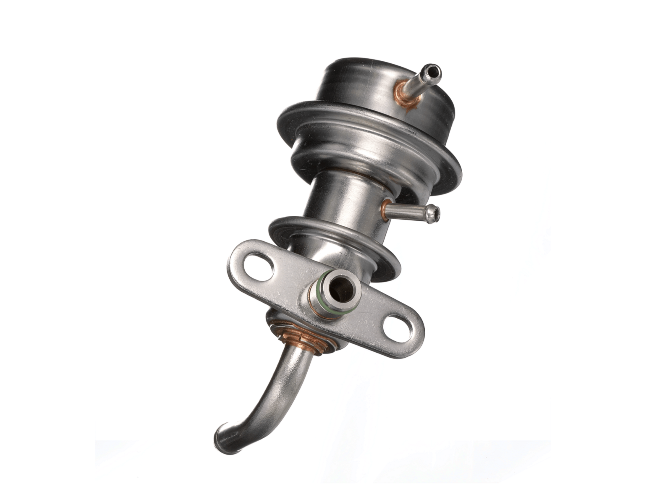
About Delphi Fuel Pressure Regulators.
Those smart designs, and rigorous testing and troubleshooting, have helped us create fuel pressure regulators and other fuel components that pass the tests of time, emissions standards and customer satisfaction.
Critical to Engine Function.
A fuel pressure regulator works to maintain proper and consistent pressure for the injectors during a variety of driving conditions. Pressure that is too high can cause misfiring and increase vehicle emissions. Low pressure can cause poor vehicle performance and slow — or no — starts. Both high and low pressure can reduce fuel efficiency and even shorten the life of the engine. A leaky fuel pressure regulator diaphragm often causes lower fuel pressures, but the problem can be tricky to diagnose. Regulator issues are often misdiagnosed as an oxygen sensor problem, and can cause multiple, misleading OBD II codes.
Smooth Performance and Comprehensive Coverage.
Vehicle manufacturers have relocated fuel pressure regulators from the fuel rail in the engine compartment to the tank, which keeps fuel temperatures lower and cars running more efficiently. Our OE design enhances fuel control accuracy for smooth driving and emissions performance that will keep your customers happy. Delphi uses exclusive NitrileTM nylon fabric diaphragms, which are strong and resilient against corrosive, high-ethanol fuels.
Our fuel pressure regulators are available in two different designs--universal pressure and mini-cartridge pressure--for wide coverage of domestic vehicles on the road today.
All Delphi mini-cartridge regulators are 100% flow tested and the pressures are factory calibrated. Six Delphi mini-cartridge part numbers represent more than half the sales volume on GM applications, which helps streamline your inventory and reduce your investment.
The Delphi Difference
-
100 years of OE experience, supplier to the world’s top automakers
-
OE heritage and knowledge built into every aftermarket part
-
Comprehensive portfolio for a wide range of vehicles and model years
-
Streamlined SKUs for easy inventory management
-
Support through tools, tips and training

Related product resources and downloads

Resource Highlights
In this article you will find out about what to do if you put the wrong fuel in your car. It could be a costly error, but with some simple advice from Delphi we can help you minimize any damage and get you on your way again……and if you only remember one point from this, DO NOT start the ignition.
We’ve all been there. You’re stood at the fuel pump thinking about your day ahead. That impending deadline at work. The kid’s homework. Or what’s for dinner that evening. And before you know it, you’ve filled your diesel car with gasoline. Or your gasoline car with diesel. Ouch! It could be a costly error, but with some simple advice from Delphi we can help you minimize any damage and get you on your way again……and if you only remember one point from this, DO NOT start the ignition.
What to do if you put gas in a diesel tank:
Unfortunately gasoline nozzles can easily fit into most diesel tanks so it’s an easy mistake to make. It can also be an expensive mistake to make, as putting petrol in a diesel car can cause significantly more damage than the other way round – diesel in a gasoline car. That’s because diesel actually helps to lubricate the fuel pump. Gasoline, however, works in reverse reducing the lubrication and creating friction between the key system components. This is bad news for you and your engine!
With today’s Common Rail diesel engines injecting fuel at pressures up to 2,000 bar, and injector tolerances being measured in microns, even a small amount of petrol can cause major damage to the pump and injectors. Worst still, because of the high pressures and flows involved this can easily and quickly spread to the rest of the engine, causing yet more damage. The result? It could mean a new pump, filter, injectors, pipes, rails and even potentially a whole new engine. With a possible repair bill running into the thousands.
What to do if you put diesel in a gas tank:
On a positive note, it’s unlikely that you’ll put diesel in a gasoline car as the diesel nozzle is normally bigger than the petrol tank filler. And even if you do, the impact will be a lot less. Typically you’d be looking at a clogged fuel system and spark plugs, and whilst the car won’t start because of it, it is easily repairable.
So now you know the consequences let’s take a look and what to do if you have a fueling mishap – there are three simple steps:
- NEVER turn the ignition as this will pump fuel through the system – remove your keys from the ignition just to be sure. If you’ve already started the car, chances are damage has already been done but stop as soon as possible.
- Put the car in neutral and get help to push the car to a safe place.
- Call your local garage/recovery services for immediate assistance. They’ll be able to drain the fuel and assess any damage.

Visit our Technician Library for access to Documents and Downloads
Get in touch

Contact Us
Visit our Contact hub to find a range of enquiry types suited to help you find the exact support you are looking for.