Resource Highlights
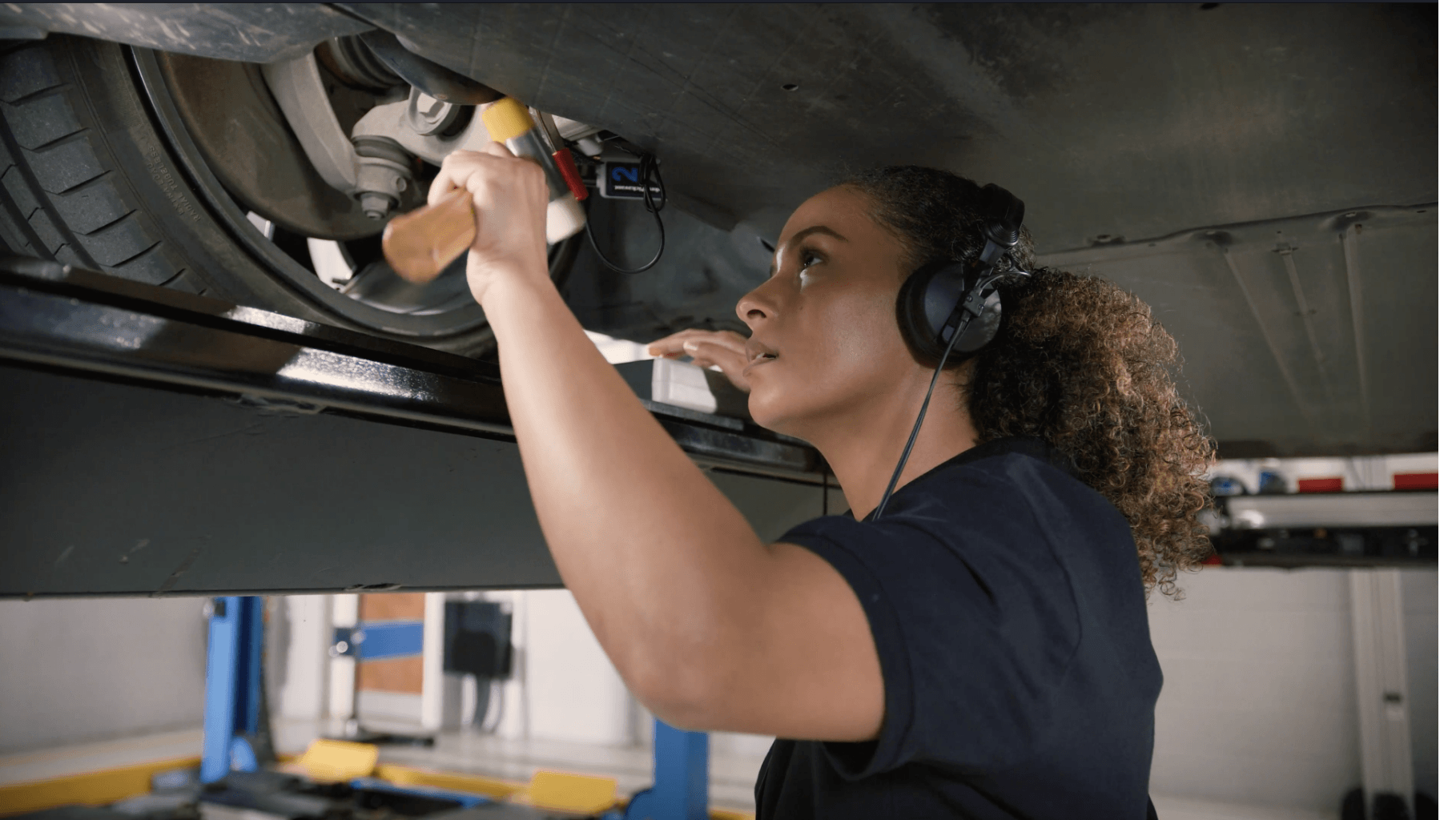
Common brake noises
The most commonly heard noise from brakes is a high-pitched squealing, screeching sound. On occasion, when no friction material remains, a grinding noise when braking may be heard. Those with performance vehicles may also notice a ticking sound when braking if they have grooved disc brakes.
Grinding sounds when braking
A grinding sound when braking is a sign of a serious issue. This suggests no friction material is in place. With the pad completely worn down, or fitted incorrectly, metal connects with metal resulting in the grinding sound.
The way in which the driver is alerted to the fact that the brake pads need replacing will depend on the vehicle. Some feature a mechanical wear sensor with a metallic element placed within the pad. Once it wears down far enough, the metal makes contact and creates an unpleasant high-pitched sound. On other vehicles, a sensor triggers a warning on the dashboard when it needs to be changed.
Knocking, banging, clicking or clunking sounds
Any knocking, clicking or clunking sounds suggests an issue with fitting of the brake components and should be investigated immediately. Ensure that the correct brake pads are fitted as well as the brake pad shims. If the caliper is loose, or the anti-rattle spring is broken or missing, this can also result in noisy brakes.
How to achieve quieter braking
All noise is caused by vibrations. Reducing vibrations reduces noise. If you’ve fitted premium products and checked the fitting, there are three further steps to reduce unwanted noise.
- Clean. Remove dust and debris using appropriate cleaners to ensure the brakes perform at their best
- Lubricate. Apply the right lubricant, at the right application point, in the right amount. This will protect the braking system, prevent wear and tear, improve performance, and reduce noise.
- Replacing fitting kit (if applicable). Replacing the fitting kit can ensure the connections and fittings within your braking system are optimised.
All Delphi parts meet or exceed the OE standard. Find out more.
Noise from performance brake discs
Some performance cars will have vented, drilled, or grooved brake discs fitted. These don’t have the flat smooth surface found on most brake discs. The holes or dimples act to clean the surface on the pad and to dissipate heat from the brakes.
With these kinds of brake discs, a gentle ticking may be heard when the brakes are used. This is completely normal. However, it may be more noticeable at certain times, such as when new brake discs are fitted (over time, dimples can flatten) or when the noise is amplified in a tunnel or with the windows open. Why choose Delphi for brake components
Every Delphi part is designed to duplicate or exceed OE standard, giving you the peace of mind of premium quality. For example, chamfered brake pads (with angled edges - chamfers) that reduce squealing noises, improve bedding in, and wear more evenly.
How do I know the brake pads need replacing?
Most recent vehicles have electronic brake pad sensors fitted. When the pad wears down, the sensor triggers a warning light on the dashboard. Some vehicles have a mechanical brake pad sensor. This is a thin piece of metal that is exposed when the pads wear down. As it comes into contact with the disc, it creates an unpleasant squealing sound.
What does it sound like when brake pads need replacing?
A squeaking or squealing sound when braking is the first sign that the pads need replacing. If the brake pads are not changed and become completely worn down, it will create a grinding noise when braking. The pads should be changed immediately to ensure the vehicle is safe and to prevent damage to the braking system.
What causes a knocking sound from the brakes?
Any knocking or rattling suggests incorrect fitting, with components that are loose or possibly broken.
Why do new brakes make a ticking sound?
Some performance brakes are vented, drilled, or grooved. This can create a gently ticking sound when braking, which may be more noticeable when they’re newly fitted. This noise is nothing to worry about.
How to quieten squeaky brakes?
The braking system should be clean and correctly lubricated, with premium parts correctly fitted. This will minimise noise from the brakes and ensure they perform at their best, for longer.
Give your customers the peace of mind of Delphi parts. Find out more.
Learn about the latest in braking
SIGN UP TO FIND MORE
Fill up your details to hear more from our experts and get the latest updates from Delphi.

Diagnostics
Discover our extensive range of OE-level diagnostic and test equipment for quicker, more accurate servicing and repairs.

Training
Choose from our expert-led, accredited training courses to enhance your skills and prepare you for the vehicles of tomorrow.
Find out where to buy Delphi parts