Resource Highlights
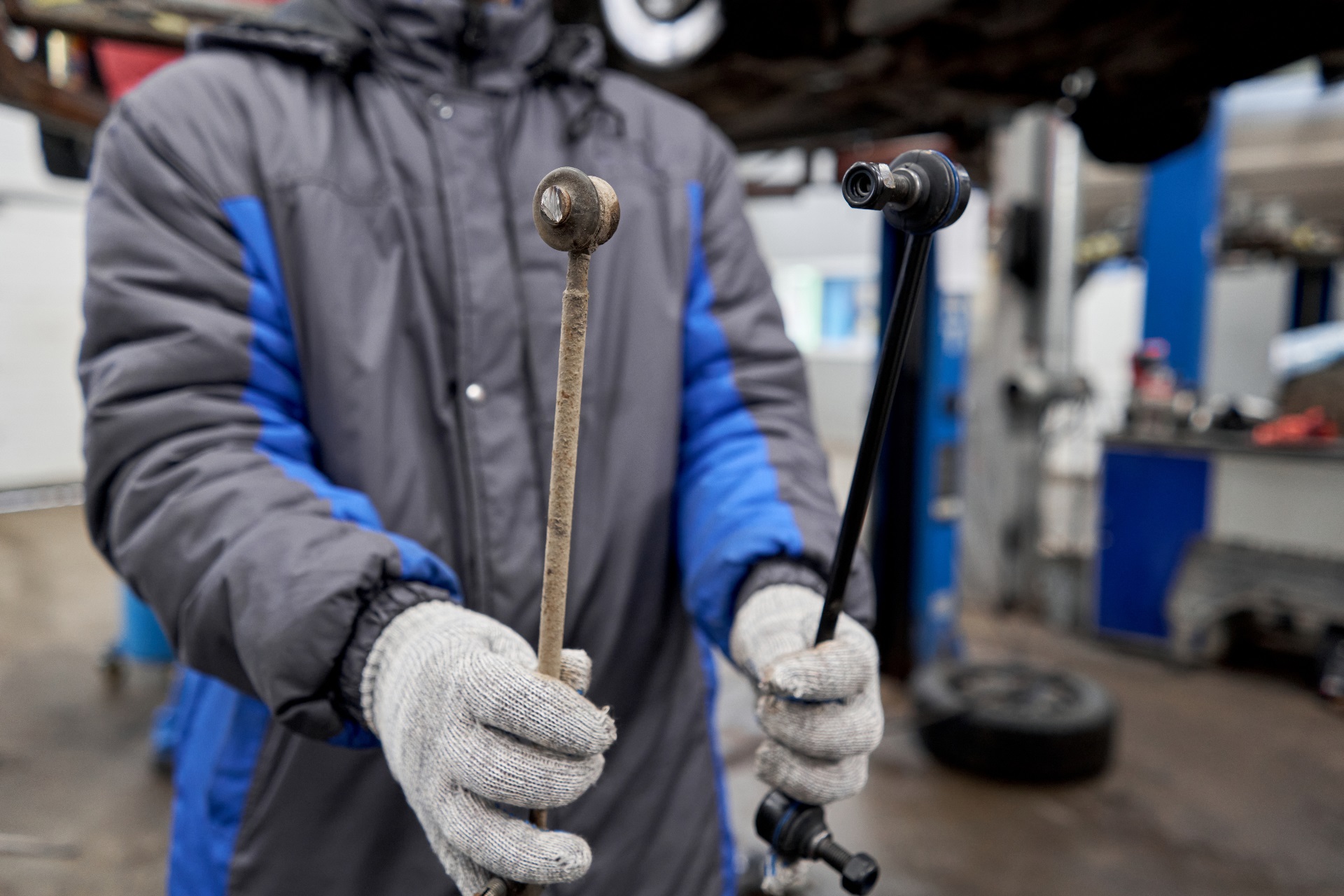
What is an anti-roll bar link and what does it do?
For the anti-roll bars on a vehicle to work, they need to be connected to the suspension system with the anti-roll bar links. These small rods are usually made from metal (sometimes plastic). At either end is a ball joint, encased in a rubber boot or bellow, which allows the link to twist.
When the vehicle corners or one side of the vehicle is raised (such as driving over a speed bump), the anti-roll bar links twist accordingly. This ensures stability and reduces body roll as well as keeping the maximum tyre area on the ground.
What causes anti-roll bar links to fail?
Movement of the ball and socket at either end of the anti-roll bar links make them susceptible to wear and tear. Corrosion can affect them, especially as the rubber elements age and allow moisture to get in more easily.
Anything that adds extra stress to the anti-roll bar links can also speed up the effects of wear and tear. For example, poor road surfaces, speed bumps, and hitting the kerb. In extreme circumstances, overloading the vehicle can also affect their performance.
Delphi anti-roll bar links are always to OEM spec. Find out more.
Symptoms of a bad anti-roll bar link
Below, you’ll find the most common symptoms to help you identify a bad anti-roll bar link.
Noise from a failing anti-roll bar link
By far the most common symptom of problems with the anti-roll bar link is a light rattling or knocking noise. This could be from the front or rear, nearside or offside, depending which anti-roll bar link has issues.
The D-bushes on the anti-roll bar are also susceptible to wear and tear but the noise they create is a heavier knock with a deeper tone.
Other potential symptoms of anti-roll bar link problems
Wear and damage to the rubber boot around the ball joints are the most common failure points of the anti-roll bar links. As the anti-roll bar will not be performing correctly, there may be additional body roll when the vehicle corners. However, this is unlikely to be noticeable in standard driving conditions. If the problem is ignored, there is also the risk of uneven tyre wear as there is less stability.
In extreme circumstances, a plastic anti-roll bar link could snap. Should this happen, the anti-roll bar will not be effective so there will be excessive vehicle body roll.
Find anti-roll bar links for every vehicle. See our range.
How to diagnose a bad anti-roll bar link
Ask the customer about any noises they have heard. Driving straight on an uneven road surface should create the light rattling sound associated with bad anti-roll bar links.
When checking the anti-roll bar links under the vehicle, it’s best practice to have both sides raised, for example on a ramp. By holding the anti-roll bar link and moving it around, you may find excess play which is a clear sign that replacement is necessary. Check for wear and tear on the ball joints as well as the D-bushes at this time. Whilst it is not necessary to change the anti-roll bar links it pairs, you may want to offer this option to the customer for additional peace of mind.
How to replace anti-roll bar links
Below, you’ll find an overview of how to replace anti-roll bar links. Be sure to watch the video to see how it’s done.
Step 1: Remove the existing anti-roll bar link
Raise the vehicle and remove the wheel. Rolling the strut will give better access to the top nut. Clean the threads with a wire brush to make removal easier (and use lubricating oil if necessary). With the nuts off, you can remove the anti-roll bar link.
Step 2: Fit the new Delphi anti-roll bar link
Once the old anti-roll bar link is removed, make a visual comparison with the new one to ensure the dimensions are the same. Then start by hanging the new anti-roll link bar from the top fixing (but do not fully tighten yet). Secure the bottom nut first, holding the centre with an allen key while you tighten the lock nut. Secure with a torque wrench set to the manufacturer’s specification. Repeat this process to secure the top nut, torqued to manufacturer’s specification. Now replace the wheel.
Is it safe to drive with bad anti-roll bar links?
If the part is not snapped or missing, the car is safe to drive. However, it should be replaced as soon as possible to prevent further damage. This avoids stress on other parts of the suspension system.
Do anti-roll bar links need to be replaced in pairs?
Although it is not necessary to replace anti-roll link bars in pairs, you may offer this to your customer for additional peace of mind.
How long do anti-roll bar links last?
There is no time or mileage limit that affects how long anti-roll bar links will last. It will largely depend upon driving conditions (weather, salt, road surface etc) as wear and tear is the most common issue.
Do anti-roll bar links affect alignment?
No. Anti-roll bar links will not affect alignment of the vehicle.
What do failing anti-roll bar links sound like?
A light rattling or knocking noise can often be heard. This is due to excessive play in the ball joint when the rubber boot fails, or simply general wear. This noise can be heard when driving straight on an uneven road surface.
Stay up to date with suspension training
SIGN UP TO FIND MORE
Fill up your details to hear more from our experts and get the latest updates from Delphi.

Diagnostics
Discover our extensive range of OE-level diagnostic and test equipment for quicker, more accurate servicing and repairs.

Training
Choose from our expert-led, accredited training courses to enhance your skills and prepare you for the vehicles of tomorrow.
Find out where to buy Delphi parts