- Product Information
- Product Resources
- Enquire
- Related Products
Latest OE technology
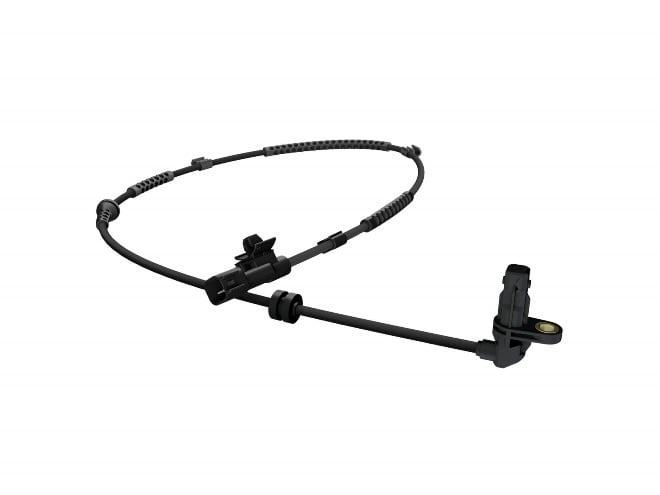
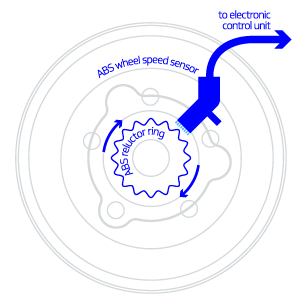
Our ever-expanding range of ABS sensors features the latest digital signal technology. By creating a digital, square wave, Delphi magneto resistive and hall effect sensors only change frequency, not amplitude, improving accuracy, especially at lower speeds. They can also detect the direction of the wheels; forward, reverse and even stop. This is vital for hill hold control, autohold and automatic parking assistance technologies.
Protection from the elements
Given its position, the ABS sensor is particularly vulnerable to contamination from dirt and moisture. That’s why Delphi ABS sensors feature weather-pack connectors that lock out dirt, moisture, chemicals and other contaminants, coupled with plated pins for even great corrosion protection and improved conductivity.
Extreme testing
Water, heat and vibration can all affect a sensors characteristic. So we subject all our sensors to extensive thermal, shock and vibration testing just to be sure. With test temperatures ranging from -40 o C to 140 o C, we know they’ll perform even in the most challenging conditions. Delivering optimum stability and reliability at all times.
Easy installation
For right-fist-time fitment, Delphi ABS sensors are designed to match the OE. With like-for-like mounting and connector designs and wire lengths, technicians can fit quickly and easily, straight from the box.
The complete solution
As well as a growing range of ABS sensors, we also offer advanced diagnostic capability including the ability to read live fault codes and individual wheel speed data, essential repair data through our vehicle technical information package, and expert training and technical support.

The Delphi Difference
-
100 years of OE experience, supplier to the world’s top automakers
-
OE heritage and knowledge built into every aftermarket part
-
Comprehensive portfolio for a wide range of vehicles and model years
-
Streamlined SKUs for easy inventory management
-
Support through tools, tips and training

Related product resources and downloads

Resource Highlights
The lower arm on a vehicle’s suspension system is designed to hold the road wheel in place. If this part fails, the wheel – while still attached – can drift dangerously out of alignment. Get some tips on replacing the front lower arms on a TESLA Model S with this handy how-to guide from the Delphi experts. We’ll show you:
Should I replace both lower arms?
Yes. If the front arms fail while driving, it can cause the road wheel to move within the wheel arch. This means that it is more difficult for the driver to control the vehicle. For this reason it makes sense to replace both arms.
What happens if the front lower arm isn’t replaced?
If the front lower arm isn’t replaced, the wheel drifts and can strike the back or front of the wheel arch, potentially damaging components which are found in that region such as the brake line or even the coolant pipes and cabling for the high-voltage battery in electric vehicles.
How do I remove the bolt from the bottom arm of the suspension in a TESLA Model S?
One of the bolts in the bottom arm cannot be removed conventionally without removing the high-voltage battery – a task that costs valuable time and effort. The manufacturer actually recommends cutting off the bolt in this situation. Tip: Depending on the year of production TESLA changed the bolt orientation, on some newer vehicles in may be in the correct way and not need cutting.
What do I need to remember before finally tightening the bolts on the replacement part?

Visit our Technician Library for access to Documents and Downloads
Get in touch

Find out where to buy Delphi parts