- Product Information
- Product Resources
- Enquire
- Related Products
Latest OE technology
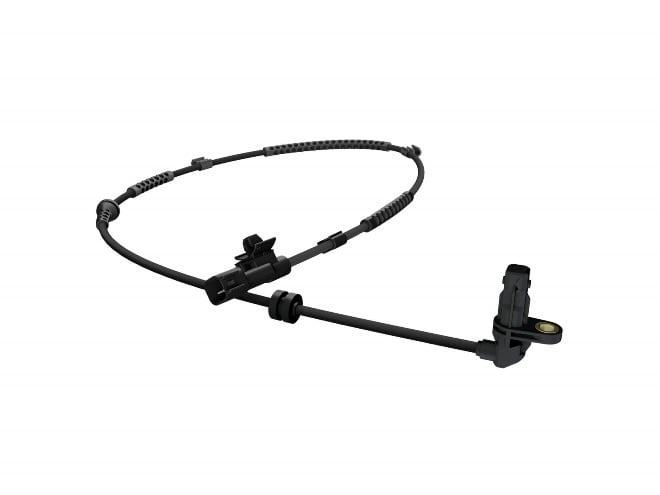
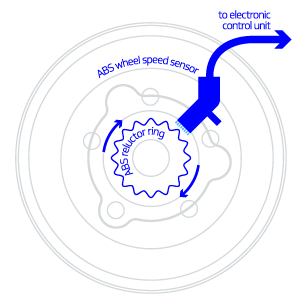
Our ever-expanding range of ABS sensors features the latest digital signal technology. By creating a digital, square wave, Delphi magneto resistive and hall effect sensors only change frequency, not amplitude, improving accuracy, especially at lower speeds. They can also detect the direction of the wheels; forward, reverse and even stop. This is vital for hill hold control, autohold and automatic parking assistance technologies.
Protection from the elements
Given its position, the ABS sensor is particularly vulnerable to contamination from dirt and moisture. That’s why Delphi ABS sensors feature weather-pack connectors that lock out dirt, moisture, chemicals and other contaminants, coupled with plated pins for even great corrosion protection and improved conductivity.
Extreme testing
Water, heat and vibration can all affect a sensors characteristic. So we subject all our sensors to extensive thermal, shock and vibration testing just to be sure. With test temperatures ranging from -40 o C to 140 o C, we know they’ll perform even in the most challenging conditions. Delivering optimum stability and reliability at all times.
Easy installation
For right-fist-time fitment, Delphi ABS sensors are designed to match the OE. With like-for-like mounting and connector designs and wire lengths, technicians can fit quickly and easily, straight from the box.
The complete solution
As well as a growing range of ABS sensors, we also offer advanced diagnostic capability including the ability to read live fault codes and individual wheel speed data, essential repair data through our vehicle technical information package, and expert training and technical support.

The Delphi Difference
-
100 years of OE experience, supplier to the world’s top automakers
-
OE heritage and knowledge built into every aftermarket part
-
Comprehensive portfolio for a wide range of vehicles and model years
-
Streamlined SKUs for easy inventory management
-
Support through tools, tips and training

Related product resources and downloads

Resource Highlights
In this piece we’ll look at the critical parts of a clutch, one by one. We’ll explain what they do, why they go wrong, and how to spot a fault.
The friction plate
The friction plate transfers power from the engine to the gearbox. In a similar way that a brake pad connects with the disc to generate friction, so the plate connects with the engine flywheel to provide the friction required to transfer energy from the engine to the transmission.
The friction plate constantly comes in and out of contact with the flywheel, and this eventually leads to wear. When the friction plate of a clutch is worn down, it can cause the clutch to slip, which means it’s failing to rotate at the same speed as the flywheel.
Clutch slipping is a problem that is compounded over time. Slipping increases the amount of friction between the clutch and the flywheel, so the more the clutch is allowed to slip, the worse the problem gets, until eventually the clutch fails.
Excessive slip can wear and overheat the linings of the friction plate, affecting its material properties. Poor driving technique can often be responsible for this, but towing and engine tuning can also accelerate friction plate wear.
The pressure plate
Generally speaking, the clutch pressure plate is not prone to wear. However, it can be damaged by a worn friction plate, when the friction material has almost worn away, and the rivets begin to make contact.
Problems with the pressure plate are usually easy to diagnose. One such symptom is when the driver has difficulty engaging the clutch pedal, and it means that the release mechanism is not functioning as it should.
Another potential sign of a defective clutch plate is when the clutch seems spongy or loose.
The release bearing
Wear of the release bearing is not necessarily linked to high mileage, rather it can be more effected by driving profile and driving behaviour. Using the clutch a great deal in urban settings tends to cause more damage than motorway driving.
Resting a foot on the clutch pedal accelerates release bearing wear, because it is in constant interaction with the clutch.
Release bearings can also fail when the grease dries within the ball race. This can usually be spotted when there is noise, such as whistling or loud squealing as the clutch pedal is depressed.
A release bearing should typically be replaced when the clutch is replaced as a whole. Alignment issues can also cause release bearing problems.
The dual mass flywheel
The dual mass flywheel (DMF) absorbs vibrations in the drivetrain, and is especially important in modern vehicles which have lighter and smaller engines, and engines operating in lower rpm ranges. The springs and shoes within the DMF are constantly at work while the engine is running. Wear is therefore inevitable on them over thousands of miles.
Symptoms of a faulty DMF can include the engine not starting due to the crank position sensor being unable to detect the speed of the flywheel. Typically a faulty DMF will make a deep rattling noise when at idle without the clutch pedal being depressed. When the clutch pedal is depressed, generally the noise will either reduce or go completely.
Damage to the DMF can be caused, too, by poor driving style, towing and engine tuning.
A DMF does not necessarily have to be changed with a standard clutch change, so you should assess its condition before recommending a change to your customer. It can be very expensive to change a DMF, however a worn DMF can cause the premature failure of a newly installed clutch.
Clutches - communicate clearly with your customer
The clutch system is one of the parts most likely to require a mechanic to service when it goes wrong. It’s also a part that can incur high cost for your customer when there’s a serious fault.
For these reasons, it’s essential you can communicate clearly with your customers about clutches, why they go wrong, and what’s required to fix them.

Visit our Technician Library for access to Documents and Downloads
Get in touch


Find out where to buy Delphi parts