- Product Information
- Product Resources
- Enquire
- Related Products
Rich OE legacy
Our heritage dates back to the legendary CAV brand, and the introduction of in-line and the iconic DPA pump – the best-selling rotary pump worldwide. Both were revolutionary for their time, setting new standards for reliability and power, and we’ve continued to push the boundaries ever since.
Three choices for fleets
By providing three choices – new, reman and repair – we can provide fleet managers with convenient service and maintenance at a very competitive cost.
Latest generation OE technology
Our latest generation F3 system takes engines beyond the 2021 global emissions and fuel economy regulations and through the next decade. Based on our proven Euro VI Common Rail technology and capable of 3,000 bar injection pressure, it delivers a substantial improvement in emissions, fuel economy and refinement for the lifetime of the engine.
OE-approved repair
In addition to new and remanufactured units, we also offer authorised repair through our global network of Delphi Diesel Centres. Replacing all wearable and performance critical parts, with like-for-like OE, and using OE-approved test plans and equipment, it offers a quality but economical solution.
Find your local diesel specialist here.
Reman
For an equally fast, yet more cost-effective turnaround we offer a range of remanufactured parts. Available off-the-shelf, typically within one to two years of vehicle launch, they are built using OE parts, equipment and processes, and are calibrated to exacting OE specifications.

OE expertise in the aftermarket
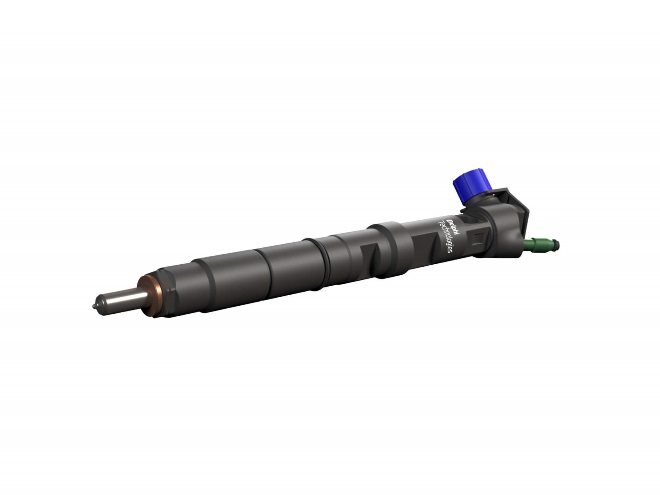
Of course, we’re committed to supporting these technologies in the aftermarket. We offer a range of new OE components, identical to those originally fitted, including our pioneering Electronic Unit Injector, Electronic Unit Pump, Smart injector and Multec® Common Rail.
Commercial vehicle diagnostics and test
Our dedicated diagnostic solution for trucks, buses and trailers, supports the key commercial vehicle manufacturers and systems, including the ability to carry out dosing tests, Adblue freeze monitoring calibration, system drain down and regeneration of the SCR system. We also offer a range of OE-approved test equipment for quick and accurate test and repair of the latest heavy duty applications.
Training from the OE experts
Designed to help you prepare for the very latest heavy duty diesel fuel injection technologies, our extensive training programme covers the repair of key systems, including Electronic Unit Injector and Pump and Smart injectors. Learn more about our training.
.jpg?sfvrsn=950636e0_12 "fis_diesel_087_injectors_group_rgb_300.png (1)")
The Delphi Difference
-
100 years of OE experience, supplier to the world’s top automakers
-
OE heritage and knowledge built into every aftermarket part
-
Comprehensive portfolio for a wide range of vehicles and model years
-
Streamlined SKUs for easy inventory management
-
Support through tools, tips and training

Related product resources and downloads

Resource Highlights
In this article you will find out about how to diagnose them for a best practice injector service:

Today’s Common Rail injectors can perform multiple injections during a single combustion cycle and inject fuel into the engine at much higher pressures – up to 30,000 psi – through clearances as small as 1 micron. Whilst this brings significant benefits, lower emissions, improved fuel economy and better drivability amongst them, it also means they are much more susceptible to wear and tear. Here we take a look at the common causes of injector failure, what the symptoms are and how to diagnose them for a best practice injector service.
Why do Common Rail injectors fail?
Although Common Rail injectors are designed to last, advances in injection technology mean that they are more prone to wear from issues including:
- Particle contamination: With tolerances a fraction the width of a human hair, even the smallest of particles can cause significant damage. Often the consequence of ineffective filtration, these minute particles can erode the control valve and ball, resulting in a poor seal between the two. Over time this can alter the fuel spray pattern, and in turn, the quantity, timing and distribution of fuel injected.
- Water contamination: Another common cause of Common Rail injector failure is contamination from excess water in the fuel. If not stored or handled correctly, water can enter the fuel and will react with the chemicals in it to corrode metal surfaces and reduce lubrication between the moving parts. Combined this can cause premature wear of both the injectors and high-pressure fuel pump
- Deposit build-up: Any fuel that is left in the injector after engine shut down, will effectively be ‘cooked’ by the residual heat, creating carbon deposits, also known as coking. If left unchecked, these deposits will build-up around the nozzle tip and the injector’s internal parts, causing the needle to stick. Again this can disrupt both the quantity and timing of injection.
- Incorrect installation: Poor installation practices can also contribute to premature failure. For example, a missing nozzle washer, or one that has not been properly seated, will allow combustion residue to leak past the nozzle washer. Similarly seal rings can easily roll out of their grooves. Whilst these may seem like simple issues, they can result in much bigger problems including poor injector performance, starting and fuel efficiency.
Symptoms of a faulty Common Rail injector?
A faulty fuel injector will almost certainly disrupt the spray of fuel into the combustion chamber. Worst case, it might even prevent it all together. Either way, it will impact vehicle performance resulting in a number of common symptoms:
- Check engine light: if the engine is not performing as it should, it can trigger the engine management light to come on. A diagnostic scan tool will be needed to confirm the fault code.
- Rough idle: if fuel delivery is restricted, the RPM at idle will drop resulting in a rough idle. If this falls too low, the car will eventually stall.
- Engine knock: when the fuel is not ignited properly, because of an incorrect air-fuel mixture for example, it can cause premature detonations – these can be heard as a knock or ping from the engine.
- Engine surge: a faulty injector may also supply too much fuel to the cylinder, resulting in engine surge. If this happens, engine revs will continue to change under constant load and throttle.
- Engine misfire: with disrupted fuel supply, the engine’s cylinders may not be able to provide enough power to the vehicle, causing it to misfire.
- Fuel leakage: if diesel is present on the exterior of the injector or nearby, the injector maybe damaged. Alternatively the seal may have worn through.
- Poor fuel economy: the ECU will compensate for any faulty injectors by over-fuelling. This causes the engine to run rich, using more fuel than is needed.
- Increased emissions: a bad injector can also result in incomplete combustion of the diesel fuel, and as such, increased emissions in diesel vehicles.
How to diagnose a faulty Common Rail injector
If your customer has experienced any of the above issues, and you suspect the Common Rail diesel injector is at fault, it’s important to conduct a thorough diagnosis to pinpoint the exact cause:
- Identify the fault code: The first stage in identifying Common Rail faults is to interrogate the vehicle’s OBD. By using a quality all makes diagnostic tool such as Delphi’s DS solution, you’ll be able to quickly identify the fault codes and narrow down your diagnosis.
- Check the injectors: If the OBD has generated a fuel injection system fault code, then check the injector’s functionality. Tools such as Delphi’s Sealed Rail Diagnostic Kit can be connected to the injectors, preventing the need for a complete system removal and refit. It collects and measures back leakage flow from the injectors and indicates which injector may be faulty and in need of replacement. By replacing individual injectors rather than a whole set, garages can save both time and money.
- Check the Common Rail pump function: Next fit the Sealed Rail Kit directly onto the high-pressure outlet pipe from the pump and crank the engine to record pressure in the system. The Sealed Rail Kit displays the results digitally and if the figure differs from the specified pressure measurement for the vehicle application, the pump could be faulty.
- Confirm if a mechanical or electrical pump fault: If the Common Rail pump is suspected of being faulty, use Delphi’s False Actuator Kit in conjunction with the Sealed Rail for further interrogation. This temporarily replaces the vehicle’s actuator to enable the pump to generate full system pressure. If the pump generates the correct pressure with the False Actuator in place, then the vehicle actuator is likely to be at fault and should be replaced. However, if the pressure is still below the required level, then the Common Rail pump may have a mechanical fault and should be repaired or replaced.
- Test the injectors electrical integrity: Using Delphi’s Electronic Injector Test Kit, you can test for an open coil circuit and a coil internal short circuit, check the coil insulation to the injector body and measure the coil’s resistance and inductance with just one tool. This will allow you to quickly and easily identify any electronic failures, both on or off the vehicle. Note if a Common Rail solenoid injector has an electronic fault, it cannot be repaired.
- Diagnose and resolve early stage lacquering: If no faults are identified during the above tests, it’s a good sign that valve lacquering is present. By performing a ‘buzz’ test, the Electronic Injector Test Kit will also allow you to check if the injector is moving freely. If not, simply use together with the Injector Solvent Cleaning Kit to clean any lacquering on the valve.
How to replace a Common Rail injector
Once you’ve identified the faulty injector, perform a best practice replacement using the following steps:
- To start, check there’s no residual pressure left in the system using a diagnostic tool.
- Then remove the injector pipe – remember to cap any exposed pipes to avoid contamination.
- Remove the back leakage. You may also need to disconnect the glow plug connector depending on the application.
- Next remove the electrical connector and holding clamp and withdraw the injector from the seat.
- Prior to fitting the replacement injector, it’s important to note the new correction code.
- Remove the protection cap from the nozzle and slide the new injector carefully into position.
- Refit the retaining clamp and torque to vehicle manufacturer’s specifications.
- Then refit the electrical connector, back leakage and glow plug.
- Install a new high-pressure pipe and again torque to the correct specifications using the proper tooling.
- Finally, reprogramme the ECU with the new correction code using a diagnostic tool. This will ensure that the adjustment to the pulse times is made and the correct fuel delivery is maintained.
How to look after Common Rail injectors
Another good way to keep your customers happy is to provide some simple maintenance advice. Just like many other parts, regular TLC will help keep the injectors in good working order, for longer.
- Inspect injectors regularly - as a rule of thumb this should be every 20,000 miles but may be sooner if frequent shorter journeys are made.
- Use a premium quality fuel with added detergents to help keep engine parts clean from deposits.
- Periodically add a fuel system cleaner to your tank to maintain the condition of the fuel injection system.
- Change engine oil regularly to keep it running at optimum efficiency. Overtime it can start to degrade, gradually losing its ability to clean, cool and lubricate the engine.
- Replace air, oil and fuel filters regularly. Dirty or clogged filters will allow contaminants into the engine, causing damage to key components and impacting engine performance and fuel economy.
- Consider your driving style. Shorter start-stop journeys and hard driving will increase the strain, and therefore wear and tear, on the fuel injection system.
By following the above advice, you’ll be able to pinpoint possible causes, streamline your diagnosis process and perform a best practice injector replacement – for a quality, long-lasting repair you and your customers can trust.
Get in touch
Find out where to buy Delphi parts