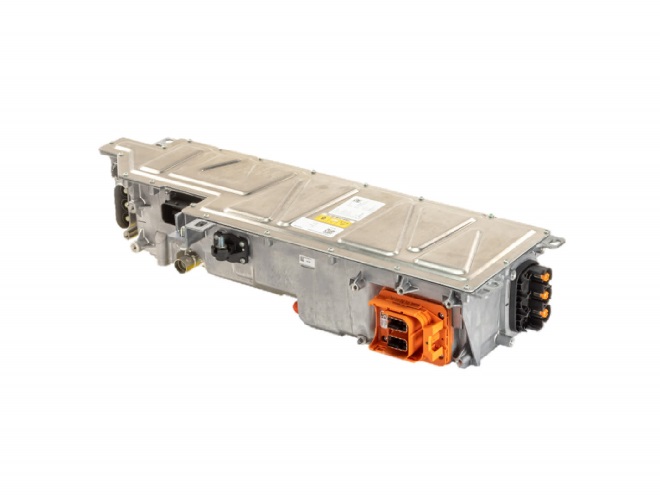
- Product Information
- Product Resources
- Enquire
- Related Products
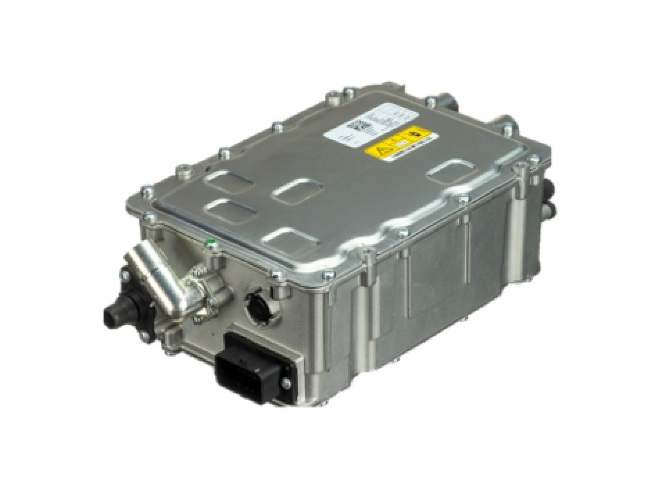
OE Part Number | Applications | DT Part Number |
12368487431 | BMW 225XE (F45) , X1 (F49), M5 Sedan (F60) | PFV10000-12B1 |
What is the difference between an inverter and DC/DC converter in an electric vehicle?
Much like how internal combustion engines and alternators work together on conventional vehicles, hybrid cars and electric motors use inverters and converters to manage power to and from the battery pack to the motors and other on-board systems.
Inverters transform direct current (DC) from the battery into alternating current (AC) to power the vehicle. Inverters also control the motor and convert it to a generator, transferring braking energy back into the battery.
Converters control the DC voltage from the battery, either stepping it up or down based on the system and the power needed. DC/DC converters usually step down the high voltage from the battery pack to the 12-volts used by radios, headlights, and more.
An OE solution for aftermarket power electronics
Inverters and converters work together to manage the vehicle's electric drive and accessory systems. However, many of today’s inverters and converters can be complex, expensive, and prone to failure from excessive heat. They are also heavy and take up a lot of room on the vehicle, compromising both trunk and passenger compartment space. Delphi OE solution combines the inverter and DC/DC converter into one unit.
Delphi CIDD is cost-effective and saves vital weight and space in hybrids (HEV), plug-in hybrid electric (PHEV), and electric vehicles (EV). And by leveraging patented OE technology - Viper-enabled inverter’s double-sided cooling - it tackles the issue of overheating, allowing higher power outputs from a smaller package and increased range.
Combined Inverter and DC/DC Converter (CIDD)
- Enhances durability and reliability through features designed to withstand under the hood and environmental factors such as debris and temperature extremes.
- Improves voltage distribution functionality, enabling both low-side and high-side power for everything from headlights to power steering and air conditioning systems.
- Provides maximum packaging flexibility and space savings by moving the DC/DC unit from its standard location in the rear to the front of the vehicle.
- Enables better power range and minimizing power losses through the elimination of cabling, cooling hoses, connections, and housings, all while simplifying maintenance and repair.
To learn more about OE quality aftermarket EV parts you can trust, contact your Delphi representative today.
The Delphi Difference
-
100 years of OE experience, supplier to the world’s top automakers
-
OE heritage and knowledge built into every aftermarket part
-
Comprehensive portfolio for a wide range of vehicles and model years
-
Streamlined SKUs for easy inventory management
-
Support through tools, tips and training

Related product resources and downloads
.tmb-2560w.jpg?Culture=en-GB&sfvrsn=68196ad4_14)
Resource Highlights
In this article, you will find out about Turbo Failure Modes: Foreign Object Impact.
Turbo Failure Modes: Foreign Object Impact
The delicate assembly of precision components in a turbocharger are specifically designed to efficiently flow very high volumes of air. To do this, they must rotate at very high speeds; in a modern high-performance turbo, the turbine and compressor wheel assembly can rotate at up to 240,000rpm when in use – that’s 4,000 rotations every second!
At these speeds, even small components have a lot of inertia (stored energy ready to be released). Consequently, the contact of any dense particles (even non-metallic deposits such as carbon build up) into the internal workings of the turbocharger can cause immediate and total failure to the turbo. This is known as a Foreign Object Impact (FOI) failure.
Determining Foreign Object Impact
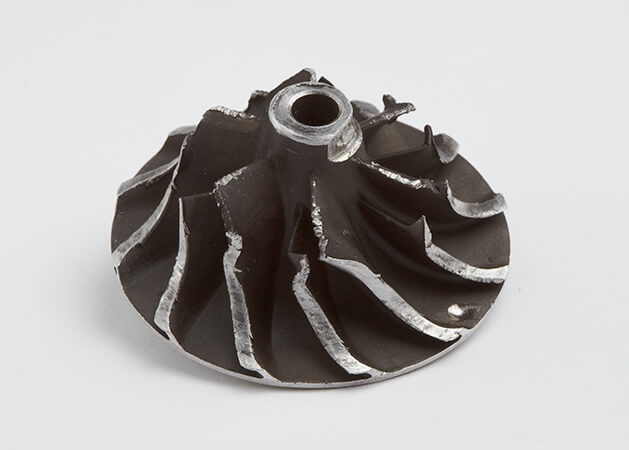
Commonly, FOI failure is categorised by the presence of damage to the compressor or turbine wheels, or their surrounding housings. A thorough visual inspection of the leading edge of each wheel should reveal a clean and consistent face, with a uniform gap between the housing. Any sign of damage here is a sure indication of Foreign Object Impact, and will require turbocharger replacement.
Consequences of Foreign Object Impact
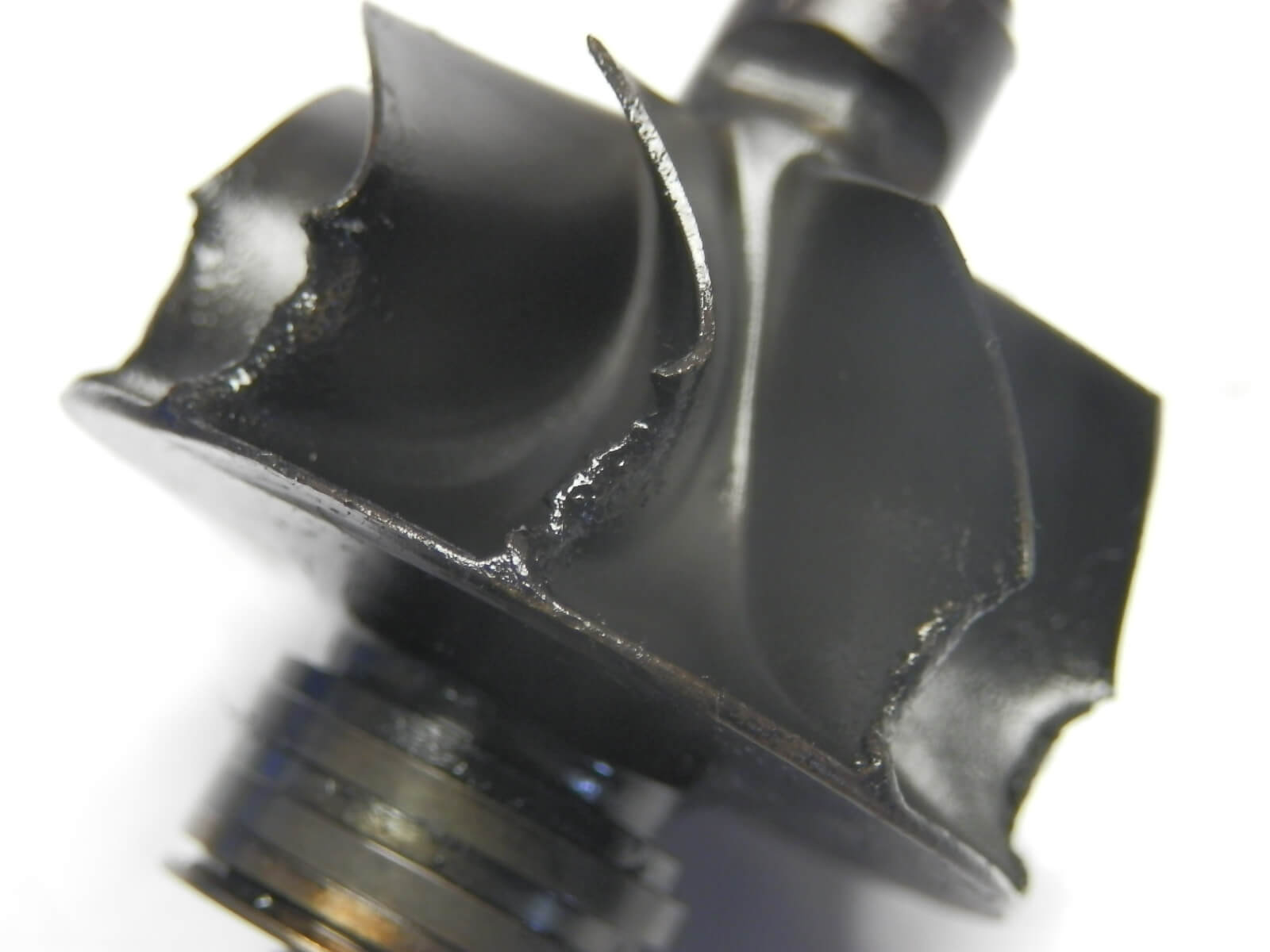
In severe cases of FOI, it is common for the resulting explosion and fragmentation of internal components at very high speed to cause instantaneous and irreversible damage to the engine, as they are carried into the combustion chamber and the turbine housing. This will cause total engine failure and render a vehicle unfeasible for repair.
To protect against FOI related turbo failures, you can undertake some simple steps to minimize the risks on your customer’s vehicle:
- Always thoroughly inspect the air induction system. Any splits or gaps in pipework or housings can draw in unfiltered particles, bypassing the air filtration system and drawn directly into the turbocharger.
- Be sure to adhere to the manufacturer’s specifications of air filter elements, and always ensure that the filter is clean and fitted correctly. Every Delphi air filter is certified to match OE quality standards – why risk anything else?
- Only ever use OE quality gaskets, seals and fitting kits when replacing a turbo – never compromise with inferior products which are liable to break, fragment or not function correctly!
If You Discover Foreign Object Impact
If you are faced with a case of FOI turbocharger failure, it is absolutely critical that the entire air supply system is totally clean and free from any particles or objects which may cause further damage before fitting a replacement. Bear in mind that this will include, but is not limited to, the intercooler, EGR valve assembly and air supply pipework on both the high- and low-pressure sides of the turbo.
Be sure to adopt a methodical approach to removing and cleaning each and every component after a FOI related failure. If in any doubt, replace the entire air supply system, and explain to your customer why this is necessary. Ensuring right-first-time fitment and function by replacing such parts is far more cost and time-efficient than having to replace a second turbocharger on the same vehicle.
Additionally, the engine oil should be flushed and changed, along with the fitment of a replacement OE quality oil filter. The oil supply and return pipes and fittings should also be thoroughly inspected for evidence of foreign objects; look specifically for metallic fragments, and bear in mind that they may not necessarily be magnetic! This may also denote the need for removal and cleaning of the sump and oil pump.

Visit our Technician Library for access to Documents and Downloads
Get in touch
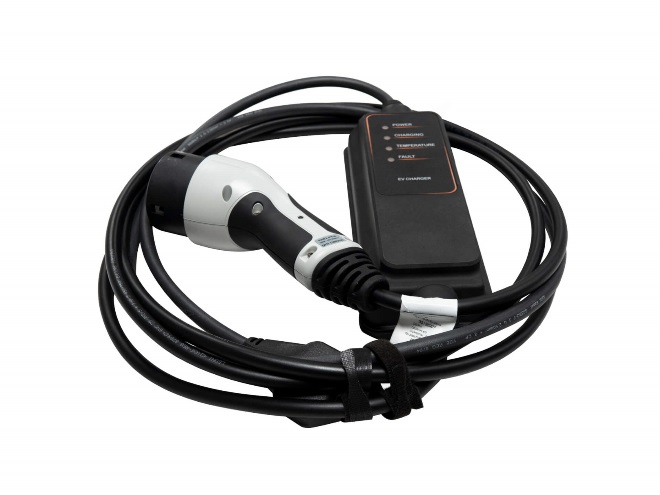
Find out where to buy Delphi parts