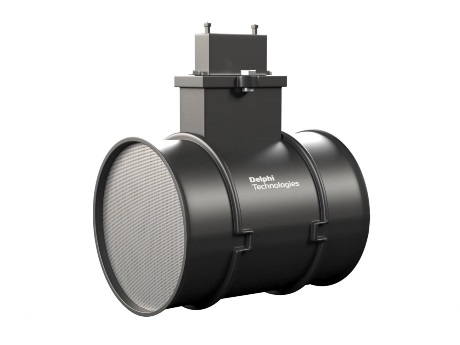
- Product Information
- Product Resources
- Enquire
- Related Products
Innovative OE design
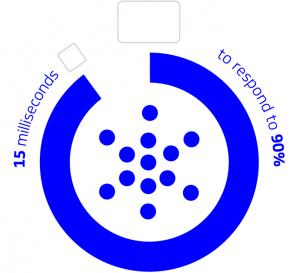
We build our OE expertise into every MAF sensor we make. Featuring a proprietary temperature compensation design, they offer outstanding performance over a wide range of ambient temperatures. And are fast to respond to changing engine conditions – typically less than 15 milliseconds to respond to 90 percent of a flow change. Innovative, dual-heated elements on specific references also help to ensure optimal performance, fuel efficiency, and reduced emissions
OE engineered and tested
By testing and calibrating to OE specifications, our MAF sensors provide the same accurate readings and airflow output as the OE. Each sensor is tested on state-of-the-art sonic nozzle-testing equipment capturing over 6,000 data points per flow, for optimal calibration accuracy. They’re also flow tested to match the OE for signal stability (noise), temperature compensation (the ability of the MAF sensor to measure airflow accurately from -30°C to 70°C) and electromagnetic compatibility.

Never remanufactured MAF sensor
Some things are better new. That’s why every sensor we make – whether with or without the housing—is built with all-new components and never remanufactured. Remanufactured MAFs are simply cleaned and tested, so any contamination on the sensor may not be eliminated, resulting in inaccurate readings to the ECU.
Greener probe-only technology
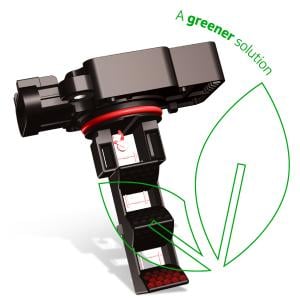
It’s often the electronics on the sensor probe that fail, meaning it’s not always necessary to replace the complete part. So we developed a probe-only solution, in addition to a full range of complete units. By eliminating the plastic housing, this provides a greener, more cost-effective and faster repair option.
The complete package
With Delphi you get access to the complete package: the range, advanced DS diagnostics including the ability to look at live data, both at idle and max RPM, to determine if the MAF sensor is reporting the correct data, expert training and support and vehicle technical information including wiring diagrams, component locations and guided diagnostic procedures.
The Delphi Difference
-
100 years of OE experience, supplier to the world’s top automakers
-
OE heritage and knowledge built into every aftermarket part
-
Comprehensive portfolio for a wide range of vehicles and model years
-
Streamlined SKUs for easy inventory management
-
Support through tools, tips and training

Related product resources and downloads
Resource Highlights
What is a knock sensor
Knock sensors detect engine vibration or detonation. Learn in detail what they are and how they work here, but in a nutshell, they send a signal to the engine control module (ECM) to prevent engine knock.
A faulty knock sensor can seriously affect an engine’s condition. Here we’ll explain how to diagnose the symptoms and advise on the best fix.
What does the knock sensor do?
The knock sensor is designed to detect signs of engine ‘knock’ – pre-ignition and other explosions outside of the main firing process.
The knock sensors work by containing a stack of piezoelectric crystals that create signals in voltage when compressed by engine knock. These signals are sent to the ECU, which then optimises the air/fuel mix to prevent further occurrences. This achieves maximum vehicle performance and fuel economy, as well as reducing emissions.
Is the knock sensor important?
Yes, a knock sensor is essential for preventing engine knock. These detonations can severely damage an engine, causing it to run inefficiently, with less power and significantly reduce its lifespan.
What are the most common symptoms of a faulty knock sensor?
There are some signs to look out for that a knock sensor could be faulty. These telltale signs tend to affect engine performance and overall condition. Any of the symptoms below could signal that the knock sensor needs a look.
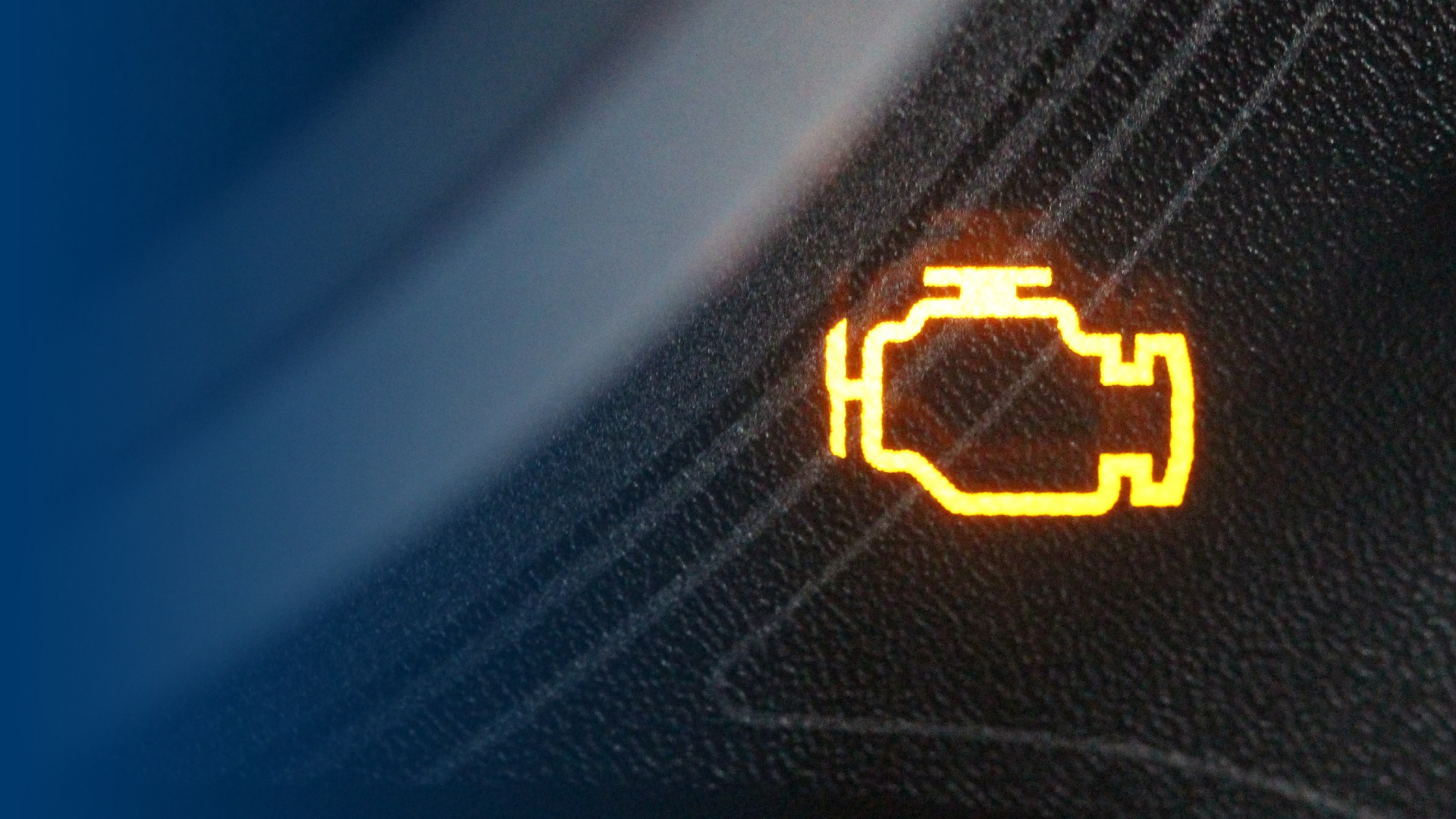
‘Check engine’ light is on
Any problem picked up by a sensor – or any problem with the sensor itself – is relayed to the ECU. The ECU then signals the driver’s attention to a problem by illuminating the ‘check engine’ light.
Engine knocking
The knock sensor is equipped to deal with engine knock by having the ECU adjust the air/fuel mix in the cylinder, thus reducing the amount of misfiring and the amount of knock. Increased engine knock – an excessive knocking or vibrating – may mean the sensor isn’t functioning correctly to send that signal.
Decreased acceleration
If the knock sensor isn’t working, the ECU can’t tell if it’s got the right mix of air and fuel in the cylinder. To protect the engine, the ECU will hamper the ignition timing, protecting the engine from unnecessary damage but removing the oomph from the engine.
Reduced engine power
The loss of power isn’t limited to trouble accelerating. The vehicle’s onboard electronics are acting to preserve the engine and prevent further damage, which means reduced torque throughout the journey.
Lower fuel economy
With its acceleration reined in, the vehicle’s fuel economy will drop too, as the engine isn’t burning the fuel as efficiently as it could be if the knock sensor were operational.
Find knock sensors and a selection of OE parts in the Delphi online catalogue
Why do knock sensors fail?
Knock sensors can break down for a variety of different reasons relating to installation, maintenance and performance during use.
Issues could be caused by incorrect installation or use of a faulty component, such as a knock sensor with bad wiring.
Excessive vibration could have shaken loose a connection, caused damage to the sensor or could be preventing the sensor from doing its job.
How to diagnose a knock sensor
If any of the above common symptoms are occurring, it’s recommended to test the knock sensor to see whether or not there is a fault. There are several ways to do this.
Test with a multimeter
Use this to check the wiring of the sensor to the control unit. Connect to the wiring harness and then measure the resistance values. A normal resistance reading should be around the 0.1 ohms mark. Any wide deviation would point to a wiring harness fault.
Test with an oscilloscope
With the engine running and idle, connect the test probes of the oscilloscope to the knock sensor and then record the signal waveform it produces. If it fails to display a knock signal, it suggests a fault. As a further test, while still recording, tap gently against the engine block near the sensor. If that knocking isn’t detected either, you have a defective sensor or circuit on your hands.
Test with a scan tool
This is a common and straightforward way to diagnose a faulty knock sensor. With a diagnostic scanner, you can quickly check for error codes stored in the ECM. A code related to a knock sensor would indicate a fault. You may wish to then test the sensor with the methods outlined above.
Error code is stored
- P0325: Knock Sensor Malfunction (Sensor 1, Bank 1), indicating a problem with the electrical circuit of the knock sensor on bank 1.
- P0326: Knock Sensor Range/Performance (Sensor 1, Bank 1), indicating that the signal from the knock sensor on bank 1 is outside the normal range.
- P0327: Knock Sensor Low Input (Sensor 1, Bank 1), indicating that the signal from the knock sensor on bank 1 is weak.
- P0328: Knock Sensor High Input (Sensor 1, Bank 1) indicating that the signal from the knock sensor on bank 1 is too high.
Knock sensor replacement
If you’ve identified you’ve got a faulty knock sensor, it’s recommended to replace it rather than attempt a repair. Replacing a knock sensor is relatively straightforward. To learn how, follow our simple 4-step guide.
FAQs about knock sensors
How serious is a faulty sensor code?
A faulty sensor code indicates a serious problem that should be looked at by a vehicle technician as soon as possible.
Can you drive with a faulty knock sensor?
Never drive with a faulty knock sensor. Without a functioning knock sensor, the engine won’t be able to know how to adjust ignition timing or mix air and fuel correctly, potentially leading to significant damage to the engine and exhaust system.
How much does a knock sensor cost?
A replacement knock sensor plus labour should cost anything from £150, depending on the make and model of the vehicle. If the sensor is located in a hard to reach area, more engine components will need to be removed, adding more labour cost.
Could a faulty knock sensor cause high input?
Yes, there is a specific error code for this fault – P0328. It’s recommended to replace the knock sensor and run a diagnostic again to check that the fault has cleared.
Get in touch
Find out where to buy Delphi parts