- Product Information
- Product Resources
- Enquire
- Related Products



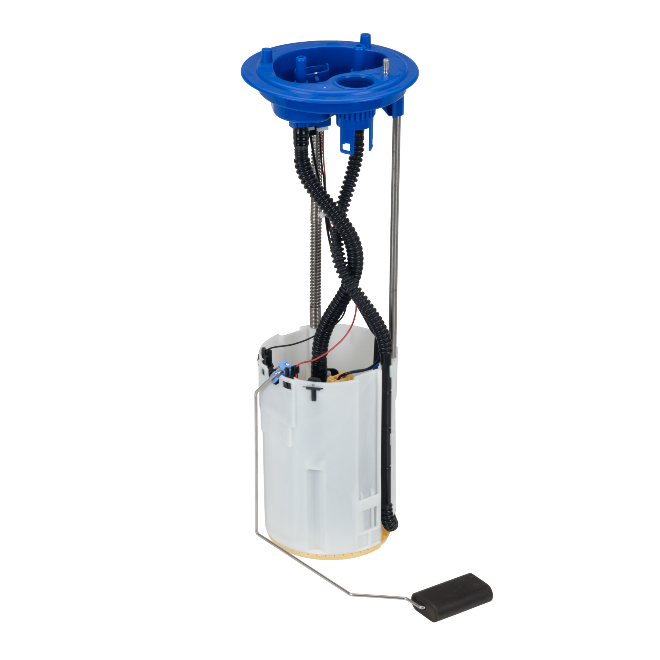
Distinctly Delphi Fuel Pumps
- Anodized aluminum can reduce flow loss by up to 100% in severe contamination
- New carbon commutator extends fuel pump life by up to 300% over commonly used copper commutators by reducing oxidation and premature wear*
- Over-molded armature protects pump windings in corrosive environments
- Button style contacts feature additional wear material that can last for over 1 million cycles
- High capacity synthetic mesh inlet filter is able to filter out all items larger than 30 microns
- Distinctly Delphi with an electric blue fuel pump top, module top cover and strainer material
*In contaminated fuel or fuel with alcohol blends
| Part# | Top Applications |
| FG0407 | 2004-99 Chevrolet Silverado 1500 V6, 2003-99 Silverado 1500 V8, 2003-01 Silverado 1500 HD V8, 2003-99 Silverado 2500 V8, 2003-01 Silverado 2500 HD V8, 2003-01 Silverado 3500 V8; 2004-99 GMC Sierra 1500 V6, 2003-99 Sierra 1500 V8, 2003-01 Sierra 1500 HD V8, 2003-99 Sierra 2500 V8, 2003-01 Sierra 2500 HD V8, 2003-01 Sierra 3500 V8 |
| FG1057 | 2013-09 Chevrolet Silverado 1500 V8; 2013-09 GMC Sierra 1500 V8, 2013-12 Yukon XL 1500 V8 |
| FG0817 | 2006-04 Dodge Ram 1500 V6, 2006-04 Ram 1500 V8 |
| FG1053 | 2016-05 Chrysler 300 V6, 2017-05 300 V8; 2010-09 Dodge Challenger V6, 2017-15 Challenger V6, 2017-09 Challenger V8, 2014-06 Charger V6, 2016-06 Charger V8, 2008-05 Magnum V6, 2008-05 Magnum V8 |
| FG1052 | 2010-05 Chrysler 300 V6, 2010-05 300 V8; 2010-09 Dodge Challenger V6, 2010-06 Charger V6, 2010-09 Charger V8, 2008-05 Magnum V6 |
In review...
- Tier 1 supplier to the top 25 global vehicle manufacturers
- Manufacturer of dependable fuel delivery parts for over 80 years
- Over 30 OE-proprietary innovations and 150 patents in fuel technologies
- Market leading North American fuel management coverage at over 95%
- Expert-led training programs and tech hotline for ASE Master Technicians and OEM experts available
Make sure to clean the fuel tank.
It's critical to clean the fuel tank before replacing a fuel pump or fuel pump module assembly. Otherwise, you risk a comeback if contaminants in a dirty tank cause the new pump to fail. Learn more about how to clean the tank in ten easy steps. Plus, Delphi offers a convenient fuel tank cleaning kit to help you get the job done.
Check all instructions carefully.
For example, when doing a fuel pump replacement with our parts FG1052, FG1053, or FG1588 you will need to pay attention to the instructions provided in the box as we've updated the wiring kit to reduce risks of overheating.
The Delphi Difference
-
100 years of OE experience, supplier to the world’s top automakers
-
OE heritage and knowledge built into every aftermarket part
-
Comprehensive portfolio for a wide range of vehicles and model years
-
Streamlined SKUs for easy inventory management
-
Support through tools, tips and training

Related product resources and downloads
Resource Highlights
In this article you will find out about GDi servicing:
No new technology is trouble free, and unfortunately GDi is no exception.
Here we take a look at one of the most common service issues – carbon build-up – and how you can help your customers keep it under control.
What is carbon build-up?
In a conventional port fuel or multi-point injection engine, fuel is injected into the intake port of each cylinder just upstream of the intake valve, where it mixes with the incoming air – the fuel mixture is then pulled into the engine cylinder. During this process fuel washes over the intake valves, removing any fuel that has oxidized or dirt from the intake air.

In contrast, GDi injects the fuel at high pressure, directly into the combustion chamber. The finely atomised and precisely directed fuel air mixture improves the quality of combustion, delivering more power and lower emissions. The downside, however is that fuel no longer reaches and cleans the valves, causing a build-up of deposits.
Types of carbon build-up
Overtime, these deposits will build up on the injectors and valves, causing several issues:
Injectors: Carbon build-up on the tip of the injector can restrict fuel delivery causing the engine to run lean, in other words too much air and not enough fuel. This can cause several issues such as rough idle, misfires, poor fuel economy and increased emissions, as well as a greater risk of detonation and preignition. These deposits typically form in the period immediately after the engine if switched off, meaning that they will build up faster during shorter, more frequent trips.
Intake valves: Overtime, carbon can also build up on the intake valves, stopping them from opening and closing properly. This restricts air flow to the cylinders, reducing engine power and fuel economy. Although intake valve deposits are a normal by-product of combustion, they can build up quicker if the valve guides or seals are worn, or in vehicles with variable valve timing, where the valves are open for longer and are therefore exposed to more carbon particles
Signs of carbon build-up
The build-up of carbon can manifest itself in a number of ways including:
- Loss of power especially when driving at higher speed
- Poor acceleration
- Cold stalling
- Engine misfires
- Reduced fuel efficiency
- Check engine light turned on
- Rough running
- Engine judder at idle speed
How to preventing carbon build-up
Whilst GDi vehicles will require a service, typically between 20 to 40,000 miles, regular maintenance in between will help prevent the accumulation of carbon:
- Change oil according to the manufacturer’s recommended change intervals and using the specified oil for optimal performance of the intake valves.
- Replace spark plugs at the recommended mileage to reduce the amount of unburned fuel in the combustion chamber.
- Use a premium quality fuel with added detergents to help keep engine parts clean from deposits.
- Add a fuel system cleaner to maintain the condition of the GDi system.
How to diagnosing carbon build-up
Unfortunately, many vehicle owners aren’t aware of the need for regular servicing until it’s too late and their check engine light comes on. In this instance there are some simple procedures you can perform to diagnose carbon build-up:
- Read any fault codes using a diagnostic tool
- Perform a vacuum test at idle and at 2000 rpm
- Check the engine blow by
- Check the valve timing
- Check compression
- Conduct a cylinder leak test
How to solve carbon build-up
But don’t worry – everything’s not lost if carbon build-up is confirmed. Although there are several products that claim to remove these deposits, the only way to completely eradicate them is to disassemble the components and perform an ultrasonic clean. Using high-frequency sound waves, our range of Hartridge ultrasonic cleaning tanks, deep cleans all surfaces including hard-to-reach crevices, ensuring a more thorough and faster clean than other methods.
So, as the number of GDi engines on the roads continues to grow, so will the number of service issues related to carbon build-up. By understanding the problems caused by this, and how best to prevent them, garages can offer their customers a full GDi solution throughout the vehicle’s lifetime.
For other common GDI service issues, click here!

Visit our Technician Library for access to Documents and Downloads
Get in touch

Contact Us
Visit our Contact hub to find a range of enquiry types suited to help you find the exact support you are looking for.