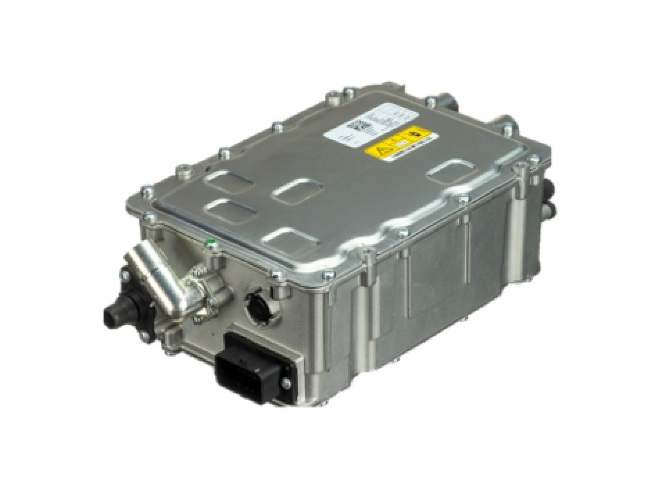
- Product Information
- Product Resources
- Enquire
- Related Products
OE Part Number | Applications | DT Part Number |
61449456002 | BMW/MINI 225XE (F45) , X1 (F49), X5 (F15) | PHV10000-12B1 |
What is an onboard charger for an electric vehicle?
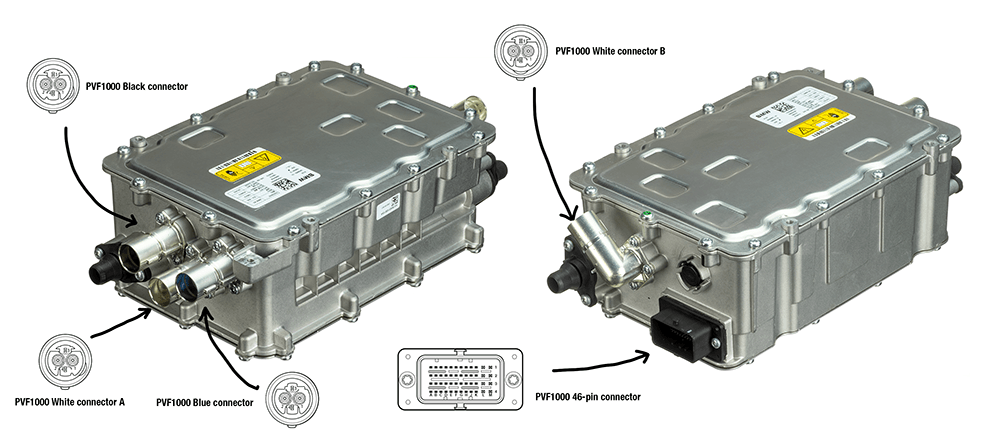
Unlike internal combustion engines, plug-in hybrid electric vehicles (PHEV) and battery electric vehicles (BEV) use an electric traction motor to drive the vehicle’s wheels. The onboard charger charges the traction battery pack, and the energy stored in the battery is then used to power the electric motor.
When an electric vehicle is plugged into a household outlet or a level 2 charger, the charging cable pulls alternating current (AC) from the power grid and sends it to the onboard charger. In order to store the electric power in the battery, the onboard charger must then convert AC to direct current (DC).
To learn more about electric vehicle charging at home-> Visit our Mode 2 charging cables product page.
Additionally, the onboard charger monitors voltage, current, temperature, and state of charge while charging for the safety of the electrical system and the driver.
To learn more about OE quality aftermarket EV parts you can trust, contact your Delphi representative today.
The Delphi Difference
-
100 years of OE experience, supplier to the world’s top automakers
-
OE heritage and knowledge built into every aftermarket part
-
Comprehensive portfolio for a wide range of vehicles and model years
-
Streamlined SKUs for easy inventory management
-
Support through tools, tips and training

Related product resources and downloads

Resource Highlights
The global market for electric vehicles is growing rapidly. And just like their internal combustion engine-powered equivalents, will require timely, efficient servicing and repair as they age. This represents an enormous opportunity for the aftermarket, but critically only for garages who have invested in the equipment and know-how to work safely on these vehicles.
Are you ready?
Global electric vehicle sales grew by 65 percent from 2017 to 2018, settling down to 9 percent growth in 20191. While car sales may have collapsed in the first quarter of 2020, the responses to the pandemic from Europe and China have strongly supported a green recovery with growth in the electric vehicle sector.
The automobile industry is ahead of schedule on approaching the tipping point of when it will be as cheap (and realistic) to own an electric vehicle than one with an internal combustion engine.2 As projected prices of battery packs drop, Wood Mackenzie expects the industry will now reach US$100/KWh a year earlier by 2024.3
Factoring in government incentives, Europe’s EV market increased by 25 percent while China hopes to rebound sales by extending purchase tax exemptions. And although EV sales decreased in the US, California’s recent ban on sales of new gasoline and diesel-powered passenger cars by 2035 might prompt other states to do the same.
Further shifting the electric VIO during the next decade is a wider mix of models available, with vehicle manufacturers planning to introduce an estimated 450 additional models by 2022. If these trends continue, a scenario from IEA predicts the worldwide electrified vehicle fleet will reach 245 million in 2030 - over 30 times above today’s level.4
At the same time, early model hybrid and electric vehicles (H/EV) are transitioning out of vehicle manufacturer’s dealer networks into the aftermarket.
The Toyota Prius, for example, is now over two decades old and requires servicing just as any other vehicle from this era would; they still need their brakes and steering serviced, they have a multitude of electric sensors that fail, and they use
the same OBD-II fault codes. Yet, many garages unfortunately continue to shy away from this work, largely because of the additional hazards that come with high voltage vehicles. By understanding the basic dangers, however, and crucially the processes
required to overcome them, technicians can work safely and competently on H/EVs.
One obvious challenge is the
high-voltage battery. Containing anything from 201.6 Volts to 351.5 Volts (PHEV), they are significantly higher than conventional 12-volt car batteries. The DC battery pack is just one source though; multiple cables
run from the pack to the motor controller, and from the controller to the electric motor, that carries equally dangerous high voltages. Accidental contact with any of these components can be fatal. As well as electrocution, there’s also
the risk of serious burns from arc flash or arc blast, and exposure to harmful battery chemicals. In addition, H/EVs contain magnetic forces that may cause the electric motor or vehicle to move – because of these forces anyone fitted with
a pacemaker should avoid working on the system.
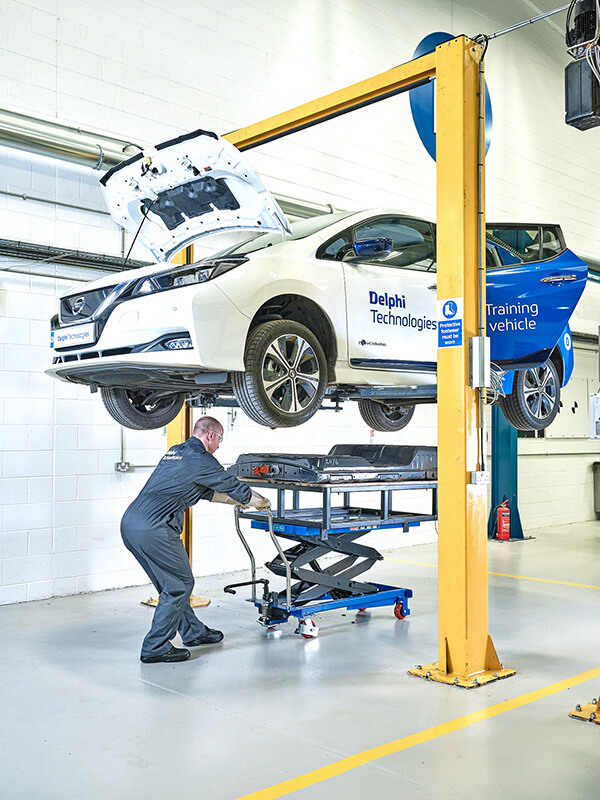
While this may sound alarming, the risks can be mitigated by always following the correct procedures. For example, technicians must wear the right PPE, including CAT 0 1000V-rated insulated gloves and either insulated boots or matting to protect against electrocution. The vehicle should also be secured in a cordoned-off area with appropriate high voltage warning signage. And any keys should be kept away from the vehicle to prevent the accidental operation of electrical systems or movement of the vehicle.
Also, before undertaking even the most routine of jobs, such as replacing the brakes, technicians must first make the car safe. To do so, the high voltage battery should be disconnected by removing the service plug or isolator switch, and again, storing it in a secure location. However, this is not an immediate fix as the high voltage will take some time to dissipate – this can be up to 10 minutes. And even then, the technician should test and prove that the high voltage cables and electrical components are dead prior to carrying out any work on the system.
As a leading OE manufacturer of internal combustion engine, hybrid and electric vehicle technology, we recognize the challenges when it comes to servicing H/EVs.
And because we know these vehicles inside-out, we’re able to provide the skills and know-how to work safely on them. Our specially designed expert-led training courses teach the fundamentals such as the need for specialist PPE, component identification, making the system safe, awareness of magnetic components, use of wiring diagrams and technical data, assessing the high voltage system, and more.
Armed with this knowledge, you’ll be able to take advantage of a fast-growing service opportunity, in an area where there’s still a shortfall of specialist skills. By investing in learning today, garages will be ready for the vehicle technology of tomorrow.
.png?sfvrsn=b4335902_4)


Visit our Technician Library for access to Documents and Downloads
Get in touch

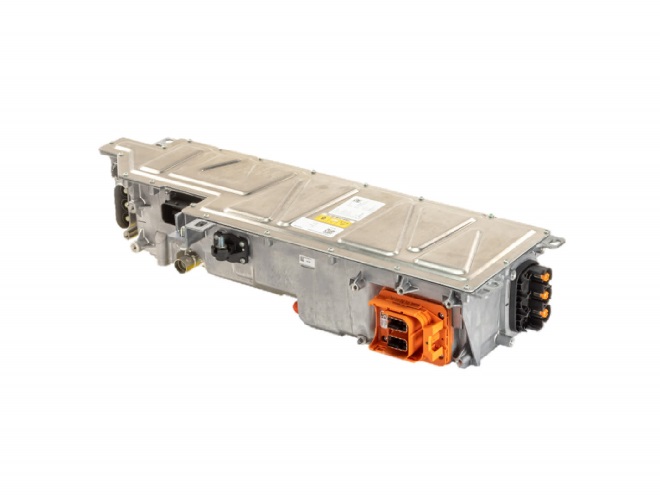
Find out where to buy Delphi parts