- Product Information
- Product Resources
- Enquire
- Related Products
Raising the bar with OE technology
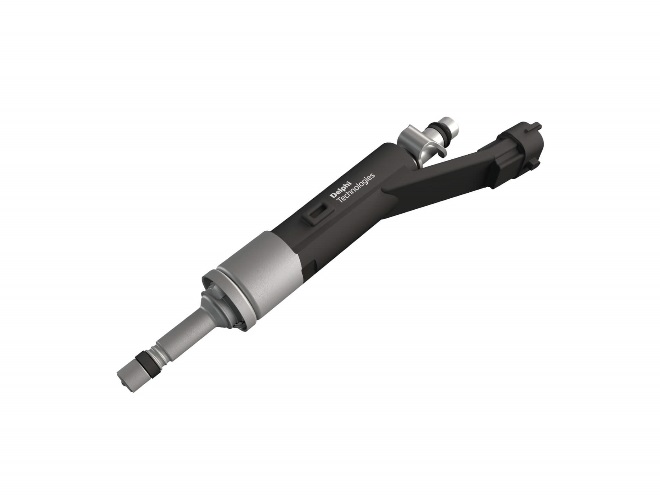
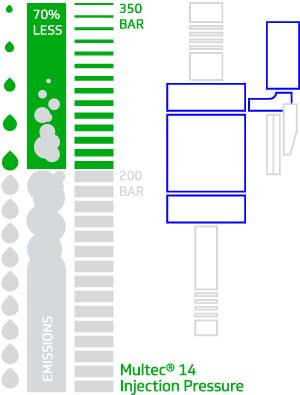
Our industry-first Multec® 14 (M14) 350-bar pressure injection system raises the bar, taking injection pressure from 200 to 350 bar. By injecting smaller droplets into the combustion chamber faster, the latest generation system delivers fewer hydrocarbons and particulate emissions – up to 70 percent - and increased fuel savings. And if that’s not enough, we’re already working on a 500 bar solution.
OE expertise in the aftermarket
We bring our OE expertise to the aftermarket too. Our GDi service programme features our award winning Multec® GDi multi-hole fuel injectors for optimised fuel delivery and combustion, low noise GDi high pressure fuel pumps and service kits, giving you access to OE parts for a high-quality, competitive service. Understand more about the common service issues with GDi.
More than parts
We also offer a comprehensive electronic and hydraulic diagnostic solution including our proven on-board DS diagnostic tool, a high-pressure diagnostic kit, HD3000, allowing technicians to safely set and electronically control any pressure test point up to 3000 bar and a wide-ranging low-pressure tester, LP35.
Training from the OE experts
Want to learn more about GDi servicing? Our range of one day specialist training courses combines theory with practical, on-vehicle exercises and cover key topics such as component operation, common systems and faults, using high pressure gasoline and more. Giving you the skills and know-how to service the latest GDi equipped vehicles.
The Delphi Difference
-
100 years of OE experience, supplier to the world’s top automakers
-
OE heritage and knowledge built into every aftermarket part
-
Comprehensive portfolio for a wide range of vehicles and model years
-
Streamlined SKUs for easy inventory management
-
Support through tools, tips and training

Related product resources and downloads
Resource Highlights
A common rail injector (CRI) is an essential component for precise fuel delivery and efficient combustion, so it’s important to look out for signs it may be failing. This page will tell you everything you need to know in just a few minutes.
What are common rail injectors?
Common rail injectors spray fuel into the combustion chambers of a vehicle. They are extremely precise components, adjustable so that they can deliver fuel at the correct pressure, timing, rate and quantity as set by the vehicle parameters. Functioning correctly, they can lower emissions and improve fuel economy and power output.
Symptoms of common rail injector failure
If a vehicle displays the following symptoms, it’s a good idea to investigate the CRI and check for faults.
Engine misfires
If the rail injectors aren’t spraying enough fuel into the combustion chambers, then the cylinders won’t be able to provide enough power. This will cause poor acceleration or a misfire.
Poor fuel economy
Without the engine being able to get the fuel it needs in the correct way, the ECU may need to compensate, potentially supplying more and therefore wasting fuel.
Rough running when idle
If the fuel supply is reduced or uneven, the RPM will fluctuate when the vehicle is at idle, causing it to feel ‘rough’. It may even stall if the RPM gets too low.
Excessive exhaust smoke
Drivers may notice more exhaust smoke than normal – either white or black depending on the injector failure mode. However, this is less of an issue with the latest emission control systems (such as DPF), even though it can lead to blocked filters.
Engine knock or rattle
A faulty CRI will affect the timing of the combustion process. This will cause audible ‘knocks’ coming from the engine. These are premature detonations from incorrect air-fuel mixtures.
Fuel leakage
If diesel can be seen on or nearby the injector, it points to it being damaged and leaking fuel.
Diagnosing common rail injector issues
- Identify the fault code: The first stage in identifying common rail faults is to interrogate the vehicle’s OBD. By using a quality all makes diagnostic tool such as Delphi’s DS solution, you’ll be able to quickly identify the fault codes and narrow down your diagnosis.
- Check the injectors: If the OBD has generated a fuel injection system fault code, then check the injector’s functionality. Tools such as Delphi’s Sealed Rail Diagnostic Kit can be connected to the injectors, preventing the need for a complete system removal and refit. It collects and measures back leakage flow from the injectors and indicates which injector may be faulty and in need of replacement.
- Check the common rail pump function: Next fit the Sealed Rail Kit directly onto the high-pressure outlet pipe from the pump and crank the engine to record pressure in the system. The Sealed Rail Kit displays the results digitally and if the figure differs from the specified pressure measurement for the vehicle application, the pump could be faulty.
- Confirm if a mechanical or electrical pump fault: If the Common Rail pump is suspected of being faulty, use Delphi’s False Actuator Kit in conjunction with the Sealed Rail for further interrogation. This temporarily replaces the vehicle’s actuator to enable the pump to generate full system pressure. If the pump generates the correct pressure with the False Actuator in place, then the vehicle actuator is likely to be at fault and should be replaced. However, if the pressure is still below the required level, then the common rail pump may have a mechanical fault and should be repaired or replaced.
- Test the injectors electrical integrity: Using Delphi’s Electronic Injector Test Kit, you can test for an open coil circuit and a coil internal short circuit, check the coil insulation to the injector body and measure the coil’s resistance and inductance with just one tool. This will allow you to quickly and easily identify any electronic failures, both on or off the vehicle. Note, if a common rail solenoid injector has an electronic fault, it cannot be repaired.
- Diagnose and resolve early stage lacquering: If no faults are identified during the above tests, it’s a good sign that valve lacquering is present. By performing a ‘buzz’ test, the Electronic Injector Test Kit will also allow you to check if the injector is moving freely. If not, simply use together with the Injector Solvent Cleaning Kit to clean any lacquering on the valve.
How to decide when to repair or replace CRIs
Common rail injectors have an average lifespan of 80,000 to 100,000 miles.
There are a number of factors that affect this, including fuel quality, engine oil, journey times and maintenance.
If you do find a faulty injector, replacing individual ones rather than a whole set can save both time and money. Tools such as Delphi’s Sealed Rail Diagnostic Kit can be connected to the injectors to identify if only one of them has a problem.

Visit our Technician Library for access to Documents and Downloads
Get in touch
Find out where to buy Delphi parts