- Product Information
- Product Resources
- Enquire
- Related Products
ECE R90 certified brake discs
It should come as no surprise that our brake discs for new vehicles launched post 1 st November 2016 are R90 certified, alongside a range for popular older applications. After all, we’ve been meeting these quality standards for many years. The only difference today: our discs now undergo official ECE R90 testing schedules including performance, dynamic friction comparison, high load integrity and thermal fatigue analysis to certify that they perform to a prescribed tolerance of the OE part.
Learn more about Delphi’s R90 certified brake discs and why it matters.

Fully coated brake discs
Thanks to a special zinc-flake, silver Geomet coating, our coated brake discs offer greater and longer-lasting corrosion protection compared with many oil-dipped or partially painted and coated equivalents, whilst also being more cosmetically appealing. And because they have no oil to clean off, they save valuable labour and service time. All this makes for a better protected disc that’s easier to install, easier to dismount as well as being easy on the eye too.

High-carbon brake discs
The added carbon content in our high-carbon discs helps to both reduce the risk of thermal cracking under high-temperature loads, and allows the discs to operate at a cooler temperature, for a more consistent braking performance. It also increases their resistance to distortion or warping for added durability, while delivering noise and judder free braking.
Cross-drilled brake discs
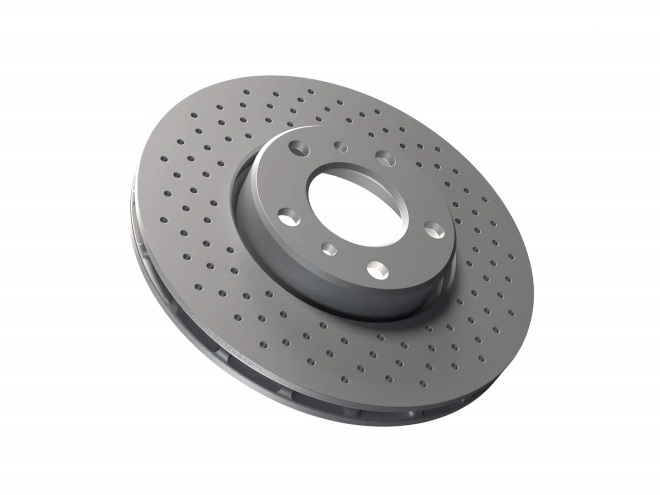
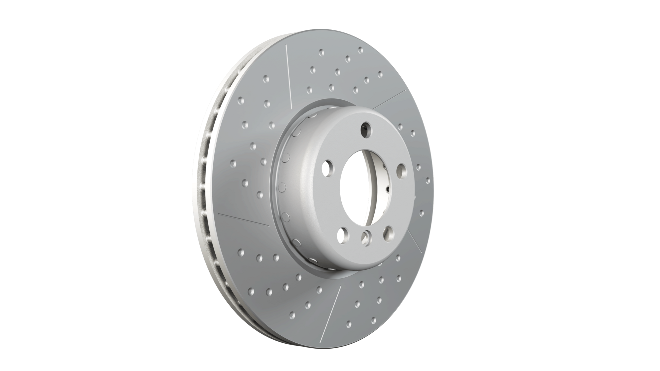
As well as looking cool from behind your wheels, our cross-drilled discs will keep your brakes feeling the same way – cool. The cross-drilled holes dissipate heat, brake dust and gases, helping to keep the pad surface cool and clean and reducing the risk of thermal distortion and warping. These same holes also prevent a film of water forming during wet conditions for improved braked response.

Vented brake discs
Our vented discs feature special internal cooling passages to maximise airflow. By continually moving air across the disc’s surface or through the disc itself, they allow more heat to be dissipated, improving both cooling capacity and resistance to cracking from thermal shock.
Brake discs with bearings
To avoid damage to the bearing during removal, and ensure the correct pressing in into the new, we offer a range of discs with these safety critical components already pre-mounted. They also include both toothed and magnetic ABS sensor rings, as per the OE, and the relevant fixing accessories. All for quick and accurate installation.
One-piece cast iron brake discs
Our one-piece cast iron discs offer an aftermarket alternative to BMW’s patented two-piece bi-metallic composite disc. Engineered from a single piece of cast iron, they deliver the same standards of consistency, longevity and braking performance as the two-piece disc, but at a fraction of the price. And to top it off, they come with fixing screws for quicker and easier fitting.
The Delphi Difference
-
100 years of OE experience, supplier to the world’s top automakers
-
OE heritage and knowledge built into every aftermarket part
-
Comprehensive portfolio for a wide range of vehicles and model years
-
Streamlined SKUs for easy inventory management
-
Support through tools, tips and training

Related product resources and downloads
Resource Highlights
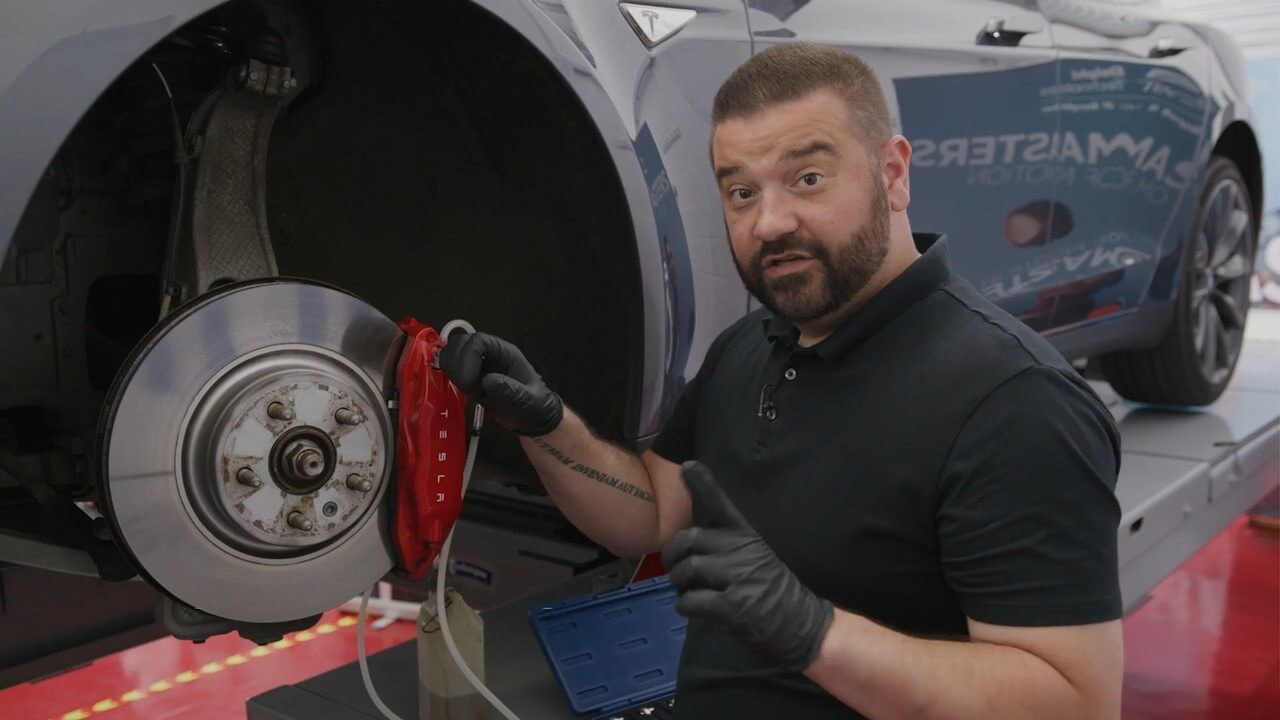
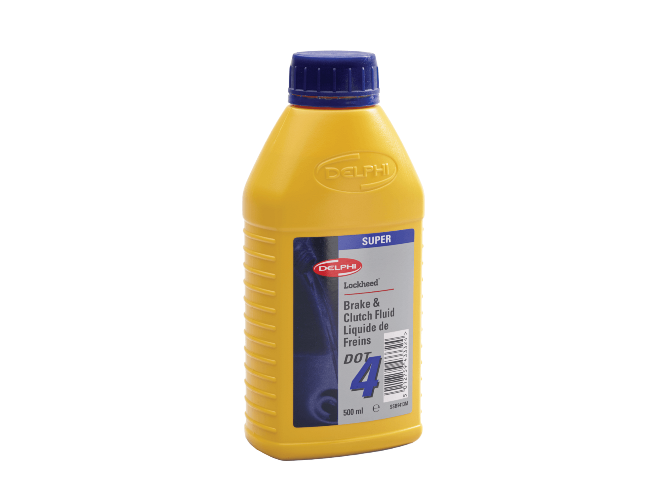
Changing brake fluid on a vehicle is an essential maintenance job. It needs to be performed because brake fluid loses its performance over time due to it absorbing water, which then leads to bubbles in the fluid.
In this Masters of Motion video, our Delphi expert demonstrates how to change the brake fluid on a Tesla Model S, sharing:
How often does brake fluid need changing?
Most manufacturers recommend changing the brake fluid in their vehicles once every two years as it plays such an important safety function.
What do I need to perform an oil change?
To change the oil on a Tesla Model S, the main pieces of equipment our Delphi expert uses are new brake fluid, a pressure bleeder and the Delphi DS480 Diagnostic Tool.
How can I tell if the brake fluid needs changing?
First, there is the manufacturer’s recommended period between changes to follow. You can also look for signs that it needs changing, such as the fluid looking dirty or smelling burnt, the brake pedals being spongy, or the fluid level having dropped in the reservoir.
What is a frunk?
This is the name Tesla gives to the storage space at the front of the vehicle. The name is a mix of the words ‘front’ and ‘trunk’.

Visit our Technician Library for access to Documents and Downloads
Get in touch

Find out where to buy Delphi parts